
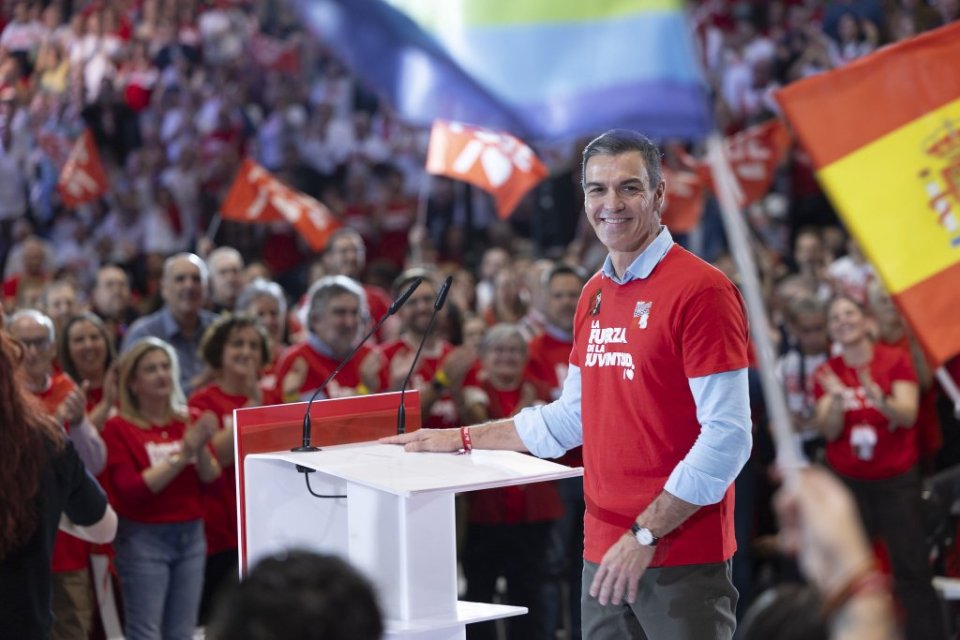
Spain’s prime minister, Pedro Sánchez, proposed a new tax on fortunes worth more than €100 million on Monday, six days before the country’s snap general election.
His Socialist Party (PSOE) estimates that the levy could raise about €2 billion a year to help fund subsidised housing, protect pensions and introduce a child-rearing benefit. The party has yet to say what rate would apply or exactly which assets would be taxed. ALSO READ: Tens of thousands march for affordable housing and higher wages in Spain’s first general strike in 14 years.
Sánchez announced the proposal in a video on X (see link below), flipping a coin to make his point. If it lands on heads, he said, ‘the ultra-rich pay and if it lands on tails, they pay too’.
‘Although we have reduced income inequality to historic lows, the richest 0.1 percent hold more than 10 percent of the wealth. And their share has kept growing since 2010,’ Sánchez, who has been in office since 2018, wrote in the accompanying post.
The announcement gives the PSOE a specific domestic proposal in the final week of campaigning. Its published manifesto had called for a global minimum tax on large fortunes, without setting out the national levy Sánchez unveiled on Monday. ALSO READ: Spain’s general election campaign opens with rallies across the country ahead of 29 November vote.
He has said the proceeds would help pay for a child-rearing benefit that would reach millions of people, alongside housing, pensions and better public services. El País reported that formally earmarking the revenue for those purposes could be technically difficult under Spanish law.
How the proposal would fit with Spain’s existing wealth taxes
Spain already has a national solidarity tax on large fortunes, introduced in 2022 to complement regional wealth taxes. It applies to net wealth above €3 million, subject to exemptions and allowances, and taxpayers can deduct wealth tax already paid.
An unnamed government source told El País that the proposed levy could operate alongside the existing tax, would affect very few taxpayers and was intended to reach some assets that currently fall outside traditional taxes. The PSOE has yet to publish the details.
Finance minister Arcadi España, who is standing for the PSOE in Valencia, defended the proposal in Alicante on Monday. He linked it to a planned extension of the tax on banks, which ministers are due to approve on Tuesday. España argued that both measures would make the tax system more progressive and help keep the statutory minimum wage free of income tax. He said the minimum wage had risen by 75%. ALSO READ: Spain raises minimum wage to €1,286 and approves 4.5% public-sector pay rise.
The PSOE manifesto also proposes a levy on high-emission luxury travel such as private jets and megayachts, with commercial transport excluded. It would also raise the top tax rate on capital income above €300,000 to 35%.
Rival tax plans before Sunday’s vote
Ada Colau’s left-wing Frente Amplio has set out a lower threshold and a rate of its own. Its manifesto proposes a permanent national levy of 3% a year on individual net wealth above €50 million, with the proceeds earmarked for spending. ALSO READ: Spain’s left heads into election divided as unity talks collapse.
It calls the measure the Zucman tax after Gabriel Zucman, the French economist who has advocated minimum taxation for the wealthiest. Frente Amplio also proposes a cap on inheritances above €10 million.
The child-rearing benefit has become a point of competition on the left. Sumar tried unsuccessfully to introduce it during the outgoing legislature. The PSOE and the parties to its left are now competing for many of the same voters, even though their support could be essential to forming another left-led government.
The debate extends beyond Spain. Left-leaning politicians in Britain, France and the Netherlands have backed various proposals to tax the assets of the wealthiest amid concern over rising inequality. Business groups have generally opposed such measures, arguing that they could drive entrepreneurs and investment abroad.
Sánchez has accused the right-wing People’s Party (PP) of wanting to cut taxes for the wealthiest. The PP’s campaign pledges include tax cuts for low- and middle-income earners and young workers, as well as incentives for businesses investing in technology and digitalisation.
The proposal came on the last day for publishing opinion polls before the 29 November general election. Spanish state brodcaster RTVE’s final polling average projected that the PP would win the most seats but fall short of an outright majority on its own, with the far-right Vox giving the two parties enough seats for a majority together. A separate survey published on Monday by the state-run Centre for Sociological Research (CIS) put the PSOE first in vote share. ALSO READ: Spain’s final polls ahead of election point to a PP-Vox majority as Sánchez closes the gap.
Subscribe to the Weekly Newsletter from Spain in English.
Aunque hemos reducido la desigualdad de renta a mínimos históricos, el 0,1% más rico concentra más del 10% de la riqueza. Y su peso no deja de crecer desde 2010. Proponemos un impuesto a las fortunas de más de 100 millones de euros para financiar, por ejemplo, una prestación por crianza, vivienda y mejores servicios públicos. Que los millones también se traduzcan en derechos.
— Pedro Sánchez (@sanchezcastejon) November 23, 2026

Click here to get your business activity or services listed on our DIRECTORY.