
The Spanish Congress voted on Thursday to approve a bill that makes consent a key determinant in sexual assault cases, freeing victims of having to prove that violence or intimidation was used against them. The bill received 201 votes in favour, 140 against, and three abstentions.
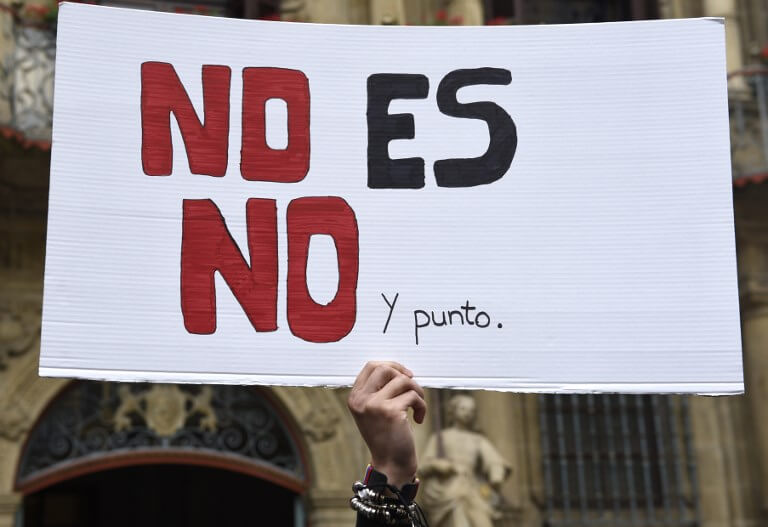
The bill, popularly known as ‘Only Yes is Yes’, seeks to tackle the nebulous definition of consent in Spanish law. In the absence of a codified definition, the law had long relied on evidence of violence, resistance or intimidation to decide whether a criminal sexual act occurred.
The legislation sets a new definition of sexual consent as from now on, ‘consent will only be understood when it has been freely shown via acts that clearly show the desire of a person, depending on the case,’ the bill reads.
The bill removes any difference between sexual abuse and sexual aggression. It defines consent as an explicit expression of a person’s will, making it clear that silence or passivity do not equal consent. Non-consensual sex can be considered aggression and subject to prison terms of up to 15 years.
The change was heralded by Equality Minister Irene Montero.
‘From today, Spain is a freer, safer country for all women,’ Montero told parliament. ‘We’re going to swap violence for freedom, we’re going to swap fear for desire.’
The bill had long been championed by Spain’s left-wing coalition government of the PSOE and Podemos parties, with only the right-wing People’s Party (PP) and the far-right Vox party voting against it. The Catalan pro-independence far-left party, CUP, abstained. The draft will now face a vote in the Senate before it can become law.
It includes a raft of other measures, from obliging minors who commit sexual crimes to undergo sex education and gender equality training to creating a network of 24-hour crisis centres for sexual assault victims and their family members.
The legislation traces its roots to the furor sparked by a gang-rape case during the San Fermin bull-running festival in Pamplona in 2016.
Initially, the five accused in the case were found guilty of sexual abuse but not rape, as the victim wasn’t deemed to have objected to what was happening. The sentences prompted widespread protests across the country and calls for Spain to join the dozen other countries in Europe that define rape as sex without consent, according to a 2020 analysis by Amnesty International.
Spain’s Supreme Court later overruled two lower courts and sentenced the five men to 15 years in prison on a rape conviction. ALSO READ: ‘Wolf Pack’ verdict overruled: gang receive 15-year sentences.
Sign up for the FREE Weekly Newsletter from Spain in English.
Please support Spain in English with a donation.
Click here to get your business activity or services listed on our DIRECTORY.
Click here for further details on how to ADVERTISE with us.
