
Spain’s Defence Ministry has referred allegations of torture and mistreatment of migrants in Ceuta to prosecutors and ordered an internal military investigation, following an Amnesty International report documenting alleged beatings, humiliation and forced returns to Morocco.
The ministry announced the measures on Wednesday after the human rights organisation accused members of the Spanish armed forces of abusing migrants and asylum seekers, including women and unaccompanied children. Amnesty said some of the alleged violence was sufficiently severe to constitute torture.
‘In view of the report made public by Amnesty International, it has been agreed to send the report to the prosecutor’s office and the duty court in Ceuta, and to instruct the Operations Command to investigate and clarify any possible individual responsibilities,’ the Defence Ministry said.
The allegations concern migrants who remained in the Spanish enclave in North Africa after tens of thousands crossed from Morocco in late July. Although most subsequently returned, at least 10,000 are reported to remain, placing pressure on local resources and contributing to tensions. ALSO READ: Spanish court to investigate deadly Ceuta migrant surge as possible ‘hybrid warfare’ operation.
Amnesty International Spain director Esteban Beltrán told Spanish media that the organisation had documented 22 cases of torture and abuse allegedly involving military personnel. He welcomed the government’s response but said it should have come sooner, urging an exhaustive investigation and the precautionary suspension of those implicated.
‘These individuals cannot remain in their duties for a single minute longer, at least as a precautionary measure, until responsibilities are determined,’ he said.
Allegations of beatings, threats and forced returns
Amnesty’s findings followed a visit to Ceuta from 10 to 15 September. Its delegation inspected areas where migrants were staying and met journalists, NGOs, prosecutors and representatives of the autonomous city’s government.
Researchers also spoke to more than 65 migrants and asylum seekers, including 31 minors and 26 women, two of whom were pregnant.
‘Many of the testimonies have highlighted the violence and degrading treatment they suffer at the hands of military personnel, including women and unaccompanied children, which in some cases, because of their severity, may constitute torture,’ Amnesty said in a statement.
Interviewees described beatings, harassment, theft of money, the confiscation or destruction of mobile phones, and insults and threats intended to make them leave Ceuta. Other allegations included forcing Muslims to kneel and kiss a cross, alongside ‘daily harassment of a racist, xenophobic and Islamophobic nature’.
One person told researchers they had been unable to walk for 25 days after soldiers allegedly detained and assaulted them before throwing them down an embankment.
‘They put cable ties on me and put me in the boot. When they took me out, they gagged my mouth and slammed my face against a tree, and then beat me with batons and punched me. When they finished, they threw me down an embankment,’ the person said, according to Amnesty.
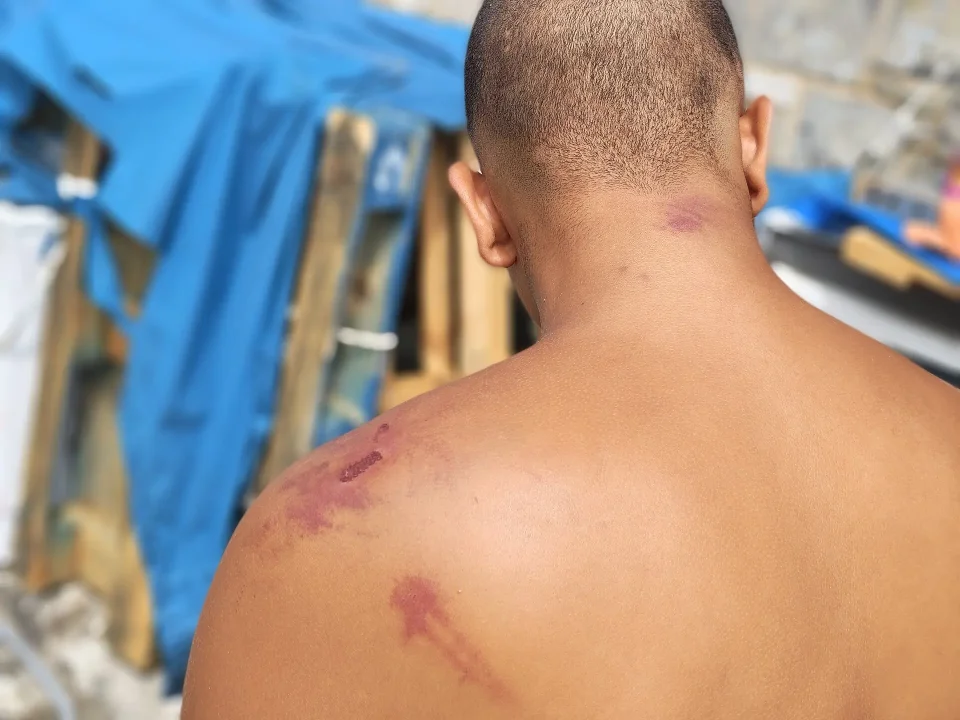
The organisation said it had documented injuries consistent with the accounts, including injuries to the head and other parts of the body.
It also reviewed photographs and videos that it said were consistent with allegations of excessive force. Footage purportedly showed hooded military personnel striking migrants at night, spraying their faces with irritants and forcibly returning them to Morocco through the Tarajal border fence.
Amnesty also examined a report by the Border Resistance collective alleging excessive force by members of the armed forces, National Police and Guardia Civil.
The organisation acknowledged the difficulties facing soldiers and police on the ground, and recognised that migrants had also committed assaults. However, it said security personnel ‘are obliged to respond to these situations while respecting national and international law and the human rights of all people’.
Children and asylum seekers left without adequate support
Alongside the allegations of violence, Amnesty described serious failings in the humanitarian response, saying thousands of people remained on the streets two months after the arrivals. ALSO READ: Thousands march in Madrid over Ceuta crisis, demanding early election and migrant returns.
They included hundreds of children and women with children who were still awaiting emergency assistance and living ‘completely unprotected’, according to the organisation.
Amnesty said access to healthcare and humanitarian support was inadequate, while food distributed by the Red Cross and other NGOs was ‘insufficient’. ALSO READ: Tensions erupt in Ceuta as protesters block food aid to migrants and government appeals for calm.
Its delegation identified shortages of drinking water, showers, toiletries, clean clothing and medical care across numerous locations. These included Benítez beach, where an encampment was cleared by police on Tuesday, Trampolín beach, the Tarajal warehouses and areas outside the Temporary Stay Centre for Immigrants, known as the CETI. ALSO READ: Ceuta police clear migrants from Trampolín beach and move them to temporary shelters.
Other locations cited were the La Hípica equestrian centre, land beside the Sidi Embarek mosque, woodland surrounding the city, Loma Colmenar and the outskirts of the El Príncipe neighbourhood.
Amnesty also reported accounts from unaccompanied minors who ‘go to the police almost daily to request protection and are repeatedly turned away, thereby violating the obligations and procedures that the Spanish authorities must follow’.
Researchers encountered potential asylum seekers from countries affected by war, including Yemen and Somalia, whose asylum procedures had not been initiated and who had not been interviewed. ALSO READ: Spain had warnings of mass migrant crossings into Ceuta, but not their scale, documents reveal.
Hostility towards migrants, journalists and aid organisations
Amnesty warned that misinformation and dehumanising rhetoric were worsening the situation in Ceuta.
‘Hatred is spreading through the city,’ it said, citing false claims and disinformation. It also alleged that journalists and NGOs faced stigmatisation, attacks and harassment by both officials and private individuals.
The organisation said its own delegation had been subjected to police identity checks during its research after military personnel and hospital security staff alerted the National Police. This followed the delegation questioning the removal from the area of people regarded as migrants.
Researchers were also allegedly harassed and insulted by a group of soldiers patrolling near the main entrance to Ceuta’s University Hospital.
While raising these concerns, Amnesty said it was ‘aware of the complicated situation’ in the enclave and expressed solidarity and support’ for Ceuta’s residents.
Calls for urgent protection and humanitarian assistance
Amnesty has written separately to Spanish Prime Minister Pedro Sánchez and Ceuta’s president, Juan Jesús Vivas, requesting investigations into the allegations and an immediate end to attacks or harassment by military and law enforcement personnel. ALSO READ: Spain will not ‘turn migrants into the enemy’, Sánchez tells UN as he highlights Ceuta crisis.
It also called for an ‘urgent plan’ to address the humanitarian crisis and immediately provide adequate assistance and dignified reception conditions, including sufficient food, drinking water, healthcare and proper sanitation.
The organisation urged authorities to identify vulnerable people and respond to their needs according to age and gender, ensure children receive protection, and arrange transfers to other Spanish autonomous communities where necessary.
It also requested transfers to mainland Spain for people at risk and asylum seekers, calling on regional governments to refrain from obstructing those arrangements.
Main image from Amnesty International España report.
Enjoying the news from Spain in English? Add us as a preferred news source in Google.
Subscribe to the Weekly Newsletter from Spain in English.
Amnistía Internacional denuncia tortura y trato degradante de militares a migrantes tras visitar Ceuta y recopilar 22 testimonios https://t.co/lttJf9bmsi
— Europa Press (@europapress) September 30, 2026
Atención tenemos respuesta a este anuncio 👉 https://t.co/uUTdGZYg7b Desde Amnistía Internacional damos la bienvenida a la acción tomada por el Ministerio de Defensa @Defensagob, pero pedimos al Ministerio de Defensa y a la Fiscalía @fiscal_es que no se quede en un mero anuncio.… pic.twitter.com/Xefjz5fL3W
— Amnistía Internacional España (@amnistiaespana) September 30, 2026
Golpes, spray, humillación… Tratos crueles e inhumanos a migrantes en Ceuta por parte de militares. Compartimos uno de los muchos testimonios que recogimos en nuestro trabajo en terreno, esta vez, el de un menor de edad.
— Amnistía Internacional España (@amnistiaespana) September 30, 2026
Tienes toda la información en nuestra web… pic.twitter.com/pUe8avJXAm

Click here to get your business activity or services listed on our DIRECTORY.