
Spain’s Congress approved a two-year extension for eligible rental contracts and prolonged eviction protections for vulnerable tenants until the end of 2030 on Thursday, a day after a general strike brought hundreds of thousands of people onto the streets. ALSO READ: Tens of thousands march for affordable housing and higher wages in Spain’s first general strike in 14 years.
Lawmakers rejected a separate decree that would have allowed tenants to renew their leases automatically and indefinitely.
The votes came hours before the official start of campaigning for the 29 November general election. The right-wing People’s Party (PP), which leads most polls, has pledged to repeal the approved measures if it takes power. ALSO READ: Spain’s right retains clear majority in poll as Socialists close gap on PP.
The Basque Nationalist Party (EAJ–PNV) cast the decisive vote on both decrees. It joined the governing Socialists (PSOE), their coalition partner Sumar and other left-wing parties to pass the first decree by 35 votes to 34, with the PP, far-right Vox, the Navarrese People’s Union (UPN) and the Catalan pro-independence party Junts per Catalunya (JxCat) voting against. The Basque party then sided with those four parties to defeat the second decree by the same margin.
Thursday’s votes took place in the Congress’s Permanent Deputation, the 69-member body that exercises certain parliamentary powers after the 350-seat lower house was dissolved ahead of the general election. Its composition gave the government a better chance of passing the measures than it had in the full chamber. JxCat, whose seven MPs helped defeat both original decrees in October, has one representative on the standing body. ALSO READ: Spain’s housing decrees defeated as pressure grows on Sánchez to call snap election.
What the housing decree changes
Eligible tenants will be able to extend their rental contracts for two years, with increases capped at 2%. Rents that already exceed the government’s reference price for the area cannot be raised. Social Rights and Consumer Affairs Minister Pablo Bustinduy said up to five million tenants could benefit. His ministry estimated a median saving of €4,341.
The decree also extends protections until the end of 2030 for tenants whom social services consider financially or socially vulnerable, where regional authorities are unable to offer them alternative accommodation. It provides for public authorities to cover costs arising from the suspension of evictions so that small landlords do not have to bear them.
A separate provision, also in force until 2030, bars property companies from buying homes for less than 70% of their appraised value. It is aimed at curbing the bulk purchase of discounted homes for resale by investment firms often referred to as ‘vulture funds’.
The package also introduces a 10% tax on tourist apartment rentals, offers a tax incentive to encourage residential letting and provides government-backed loans to help buyers cover the deposit on a home they intend to live in.
Why the second decree failed
The defeated proposal would have given tenants the right to renew their residential leases automatically and indefinitely. Owners seeking to end a contract would have had to pay the tenant compensation equivalent to a year’s rent. Housing campaigners had made automatic renewal one of their main demands, while opponents argued it would drive some owners out of the rental market and push up prices.
The PNV’s Maribel Vaquero criticised the government’s record on consultation and argued that protecting vulnerable tenants could go hand in hand with supporting small landlords. The PP has made increasing supply the centre of its housing offer, promising to oversee the construction of one million homes and cut taxes and red tape for developers.
From a Madrid eviction to a national strike
The immediate backdrop to the votes was Wednesday’s general strike over housing costs, wages and public services. The main unions called the strike after Congress rejected the original decrees. Participation in the stoppage varied, but demonstrations drew large crowds in cities across Spain. ALSO READ: Spain’s housing protests intensify as tenants’ unions push for general strike.
The housing protests gathered momentum in September after Maricarmen Abascal, an 87-year-old Madrid pensioner, was evicted from her lifelong home following a steep rent increase by the property company that owned it. She died shortly afterwards. Her eviction, which was televised nationally, prompted demonstrations and protest camps in several cities. The largest occupied Madrid’s Puerta del Sol for weeks. ALSO READ: Police clear Madrid’s Puerta del Sol housing protest camp after more than a month.
Pedro Sánchez’s minority government put forward two emergency decrees in response. After both were defeated in October, the prime minister called an early election, bringing forward a vote that had been due in 2027. The government then returned with two largely similar texts for the Permanent Deputation to consider. ALSO READ: Sánchez revives housing measures with €10bn loan plan as Spain heads towards election.
Housing debate spills into election campaign
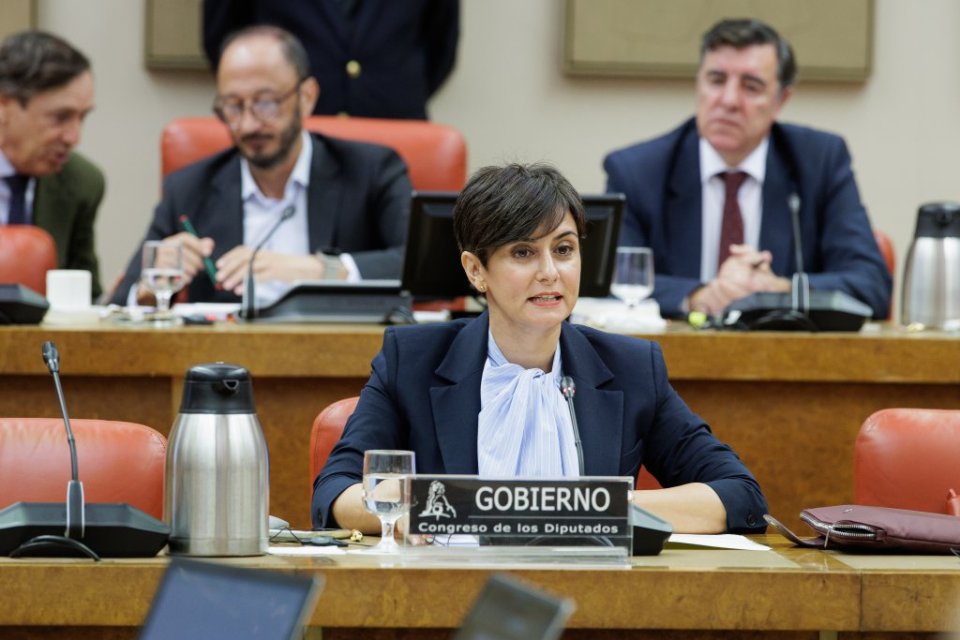
Housing Minister Isabel Rodríguez (main image) linked the protests directly to the election. ‘Yesterday, the right to housing won on the street and in workplaces, and I hope it will win again at the ballot box,’ she told lawmakers.
Bustinduy defended the strike and challenged opposition parties over whose interests they were protecting. ‘What culture of hard work, what meritocracy, is there in someone who has inherited 100 flats putting up the rents by 40% because they can?’ he asked.
The PP called for Rodríguez to resign, blamed the government for rising housing costs and accused it of using the Permanent Deputation to reverse the full chamber’s October decision. ALSO READ: PP, Vox and Junts attack Sánchez’s record as Spain heads for November election.
‘You promised us more housing and have only given us tons of demagoguery,’ PP lawmaker Sergio Sayas told the minister. Vox’s Carlos Hernández Quero argued that the government’s policies had reduced rental supply, leaving more people sharing overcrowded homes or living with their parents well into adulthood.
There was criticism from the left as well. Some parties backing the decrees accused the government of acting too late or letting electoral calculations shape its response. Podemos leader Ione Belarra criticised Interior Minister Fernando Grande-Marlaska over police conduct at some of the recent demonstrations, while Sumar MP Verónica Martínez Barbero called for his resignation.
The sharpest exchange came between the two Catalan pro-independence parties. JxCat’s Josep Maria Cruset, taking over as parliamentary spokesperson from Míriam Nogueras, accused the government of exploiting the housing crisis for electoral gain and called Esquerra Republicana (ERC) spokesperson Gabriel Rufián an ’emotional abuser’.
Rufián accused JxCat of siding with Vox – and he held up a €50 note and called it Cruset’s estelada, the Catalan independence flag. Rodríguez also challenged JxCat over its role in defeating the original decrees, telling its MPs she hoped Catalan voters would put them where they deserved to be. ALSO READ: Spain’s housing decrees defeated as pressure grows on Sánchez to call snap election.
Enjoying the news from Spain in English? Add us as a preferred news source in Google.
Subscribe to the Weekly Newsletter from Spain in English.
La Diputación Permanente ha convalidado: ✅ El Real Decreto-ley por el que se adoptan medidas urgentes para la protección de la función social de la vivienda y la ampliación de la oferta de vivienda asequible. 📝 Nota de prensa: https://t.co/N1bwNiGdX6 https://t.co/GrRwrbnVe2
— Congreso (@Congreso_Es) November 12, 2026
Hoy ha ganado el derecho a la vivienda ✊🏼 https://t.co/XtDmrIqylO
— Isabel Rodríguez García (@isabelrguez) November 12, 2026
Señorías del PP, Vox y Junts, ¿ustedes duermen tranquilos por las noches? https://t.co/BL7kBJMyNs
— Pablo Bustinduy (@pbustinduy) November 12, 2026
La prórroga de alquileres para 5 millones de personas es ley. Victoria de los sindicatos de inquilinos, sindicatos de clase y del pueblo trabajador organizado. El derecho a la vivienda se abrirá paso por encima de especuladores, rentistas y grandes propietarios. ¡Enhorabuena! https://t.co/WHI1NHrmWV
— Pablo Bustinduy (@pbustinduy) November 12, 2026

Click here to get your business activity or services listed on our DIRECTORY.
Click here for further details on how to ADVERTISE with us.