
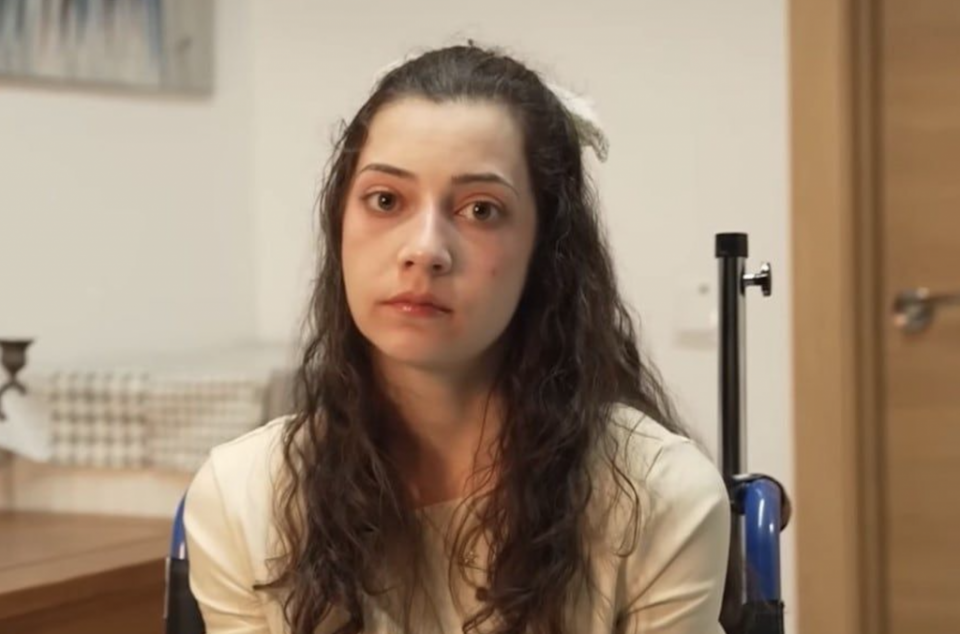
Spain is facing an intense national debate over its euthanasia law following the death of a 25-year-old woman whose prolonged legal battle has exposed deep divisions over patient autonomy, mental health care, and the role of the state.
The case — the first of its kind to be tested in Spanish courts since euthanasia was legalised in 2021 — has prompted scrutiny not only of the law itself, but also of how it is applied, and whether safeguards are being used to protect or delay those seeking to exercise it.
Noelia Castillo (main image), who had been paraplegic since a failed suicide attempt in 2022, died by euthanasia on Thursday evening at a hospital in Sant Pere de Ribes (Catalonia), after an 18-month legal struggle that reached Spain’s highest courts and ultimately the European Court of Human Rights (ECHR).
Her death, confirmed shortly after 6pm, triggered a wave of political, legal and ethical reactions across the country.
A case that reshaped the debate
Castillo had been granted the right to assisted dying in 2024 by Catalan authorities, in line with Spain’s euthanasia law, which allows adults of sound mind suffering from a ‘serious and incurable illness’ or a ‘chronic and disabling’ condition to request medical assistance to die.
However, the process was halted at the last moment after her father, supported by the conservative legal group ‘Abogados Cristianos’ (Christian Lawyers), challenged the decision, arguing that her mental health prevented her from making a free and informed choice.
The case moved through Spain’s Supreme Court and Constitutional Court — both of which rejected the appeal — before the ECHR also ruled against blocking the procedure earlier this week. ALSO READ: Spain’s Constitutional Court rejects father’s bid to halt daughter’s euthanasia.
Only after exhausting all legal avenues was Castillo able to proceed. Critics say the drawn-out process has exposed a key flaw in the system.
‘The desire to put an end to her suffering by using the right to euthanasia was … sabotaged by a legal crusade that added nearly two years of pain to her existence,’ noted the leading El País newspaper in an editorial.
Catalonia’s euthanasia advocacy group Derecho a Morir Dignamente (Right to Die With Dignity) also criticised the delays, with its president Cristina Valles saying the attempts to block the procedure ‘left us very angry and concerned’, and calling for legal reforms to prevent third-party interventions from prolonging authorised cases.
A deeply personal story at the centre
In interviews given shortly before her death, Castillo spoke openly about the suffering that led her to seek euthanasia.
‘I simply want to go in peace and stop suffering,’ she said in an interview broadcast on Spanish TV station Antena 3, the day before she died.
‘I can’t handle this family anymore, I can’t handle the pain, I can’t handle everything that haunts me from what I’ve been through,’ she added.
Castillo had spent much of her childhood in care after her parents separated, and described a troubled family background, including her father’s alleged neglect.
‘What does he want me alive for, just to keep me in a hospital?’ she asked.
She also recounted being sexually assaulted, including by an ex-boyfriend and in a nightclub, experiences that contributed to her mental health struggles before her suicide attempt.
Her mother, who disagreed with her decision, was nevertheless present with her at the Sant Camil Hospital in Sant Pere de Ribes, south of Barcelona, while others — including a former friend and public figures — made last-minute attempts to persuade her to reconsider.
Political and institutional fallout
The case has reignited political divisions over Spain’s euthanasia law.
The opposition right-wing People’s Party (PP), which originally voted against the legislation, argued that Castillo’s death highlighted systemic failures.
‘The institutions that should have protected Noelia failed her,’ wrote PP leader Alberto Núñez Feijóo. ‘I refuse to believe that the state did not have the tools to give her care.’
Abogados Cristianos echoed this criticism, with its lawyer José María Fernández stating: ‘For a girl who obviously has had a very tough life, which we all regret, the only thing that could be offered to her by the healthcare system is death.’
He also described the case as a ‘failure’ of Spain’s healthcare system that ‘only provided her with death’, arguing she should have received more extensive mental health treatment.
The Catholic Church, long opposed to euthanasia, said the case reflected ‘an accumulation of personal suffering and institutional failures’, while the Spanish Episcopal Conference warned on social media that in Spain ‘death is being presented as a solution to suffering’ in a society ‘incapable of caring and loving’.
A law under renewed scrutiny
Supporters of the legislation insist the case demonstrates the importance of respecting patient autonomy — and warn against allowing external actors to override medical and legal decisions.
Alberto Ibáñez, a member of the Spanish Congress for the left-wing Sumar platform, noted that ’19 doctors have supported her decision and we should be respectful of it’, while acknowledging the issue was ‘deeply complex’.
Under Spain’s euthanasia law, requests must be made twice in writing, assessed by two doctors, and approved by a regional ‘Guarantee and Evaluation Commission’ to ensure the decision is free from external pressure.
Despite these safeguards, Castillo’s case became the first to be escalated to the courts, raising questions about whether legal challenges can undermine the system.
Advocates are now calling for reforms to prevent similar delays in future cases.
Growing use — and growing controversy
Spain is one of a small number of European countries — alongside the Netherlands, Belgium and Luxembourg — where euthanasia is legal. ALSO READ: Spain approves bill to legalise euthanasia.
Since the law came into force in June 2021, a total of 1,123 people had received assistance to die by the end of 2024, according to health ministry figures.
In 2024 alone, 426 requests were approved.
When the law was introduced, Prime Minister Pedro Sánchez said Spain had become ‘more humane, fairer and freer’.
But Castillo’s case has shown that, five years on, the legislation remains contested — not only in parliament, but across Spanish society.
As the country reflects on the circumstances surrounding her death, the broader question now facing Spain is whether the system struck the right balance between protecting vulnerable individuals and respecting their right to choose how they die. ALSO READ: Euthanasia law in spotlight as Spain lets gunman die in prison before trial.
ALSO READ: ‘Call for life’ – Spain’s new 024 suicide prevention hotline.
Enjoying the news from Spain in English? Add us as a preferred news source in Google.
Subscribe to the Weekly Newsletter from Spain in English.
🗣️ Noelia Castillo defiende su derecho a recibir la eutanasia, en @YAhoraSonsoles: “Estoy en plenas facultades, puedo decidir sobre mí misma”.#YAS
— Antena 3 (@antena3com) March 26, 2026
https://t.co/W2Aaykq69V

Click here to get your business activity or services listed on our DIRECTORY.