
Over 100 people were killed after tens of thousands of would-be migrants attempted to enter the Spanish enclave of Ceuta from Morocco late last month, prompting the European Union, Meta and TikTok to introduce new measures aimed at tackling false and misleading information about border crossings.
More than 70,000 people are reported to have joined the mass rush towards Ceuta on 30 July, following the rapid spread of messages and videos on social media suggesting that migrants would be able to enter Spanish territory.
EU officials are now working with Meta and TikTok to prevent criminal networks and others from using misleading online content to encourage further potentially dangerous attempts to cross the border. ALSO READ: Thousands rally in Ceuta demanding urgent action as migration crisis deepens.
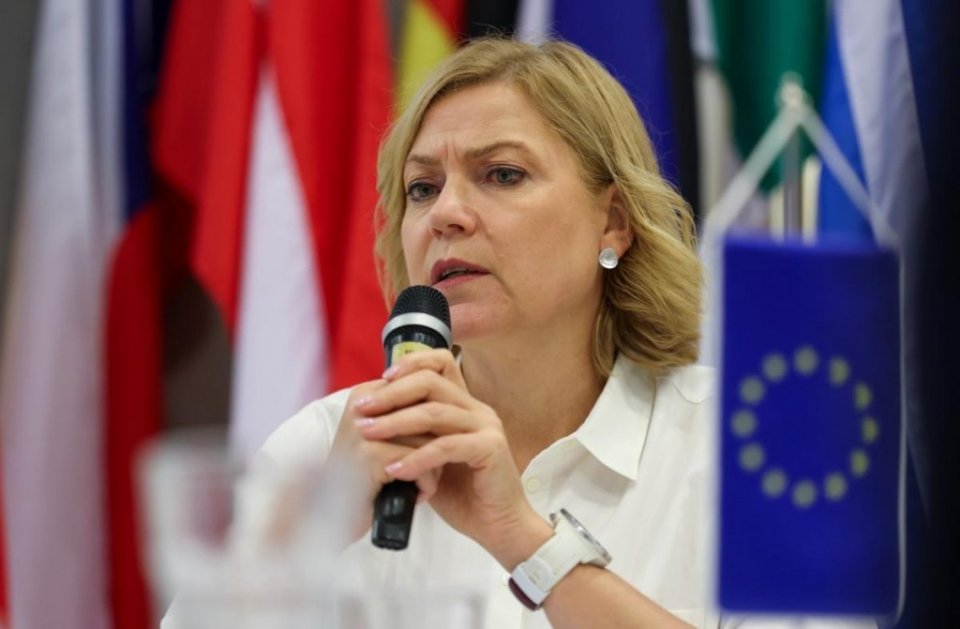
Henna Virkkunen (main image), the European Commission’s executive vice-president responsible for technology, said late on Monday that the two social media companies had agreed to establish an ‘ad-hoc escalation and cooperation mechanism with fact-checkers’ under existing crisis protocols.
The initiative will provide a dedicated means for the platforms, European authorities and fact-checking organisations to exchange information and rapidly identify potentially harmful or misleading material. Flagged content can then be reviewed by the platforms and removed where appropriate under their rules.
The move follows meetings between European Commission officials and representatives of Meta and TikTok on Friday and Monday. The fact-checking platform Maldita.es and the European Fact-Checking Standards Network also took part in Monday’s discussions. ALSO READ: EU backs Spain after Ceuta migration crisis while ministers push for tougher anti-smuggling measures.
According to Spanish media reports, those involved agreed to create an ‘enhanced information exchange and cooperation mechanism for reducing the impact of disinformation on the Ceuta crisis’.
Virkkunen said the objective was to prevent false information from being used by criminal networks to lure people into attempting dangerous crossings that could result in further deaths.
The European Commission and Europol are also discussing developments with Meta and TikTok on a daily basis, while Virkkunen has held talks with Spain’s digital economy minister, Óscar López, about measures aimed at preventing further mass crossings and loss of life.
The response has taken on added urgency amid reports that online messages are already circulating promoting another attempt to enter Ceuta on 15 August. ALSO READ: Guardia Civil say online campaign points to another possible Ceuta crossing on 15 August.
Spanish fact-checking organisation Maldita.es has identified material circulating through WhatsApp, Facebook and Instagram encouraging another mass crossing on that date. It has also reported that misleading narratives helped fuel the July influx by suggesting that migrants reaching the border would be welcomed into Spanish territory.
A number of viral videos contributed to the extraordinary mobilisation in late July. Some were linked to criminal or misleading narratives, while others reportedly included material originally published by a Spanish news organisation to illustrate the scale of migration pressure but subsequently circulated in a different context.
Meta and TikTok have said they were already monitoring developments under their existing policies and had established dedicated teams capable of identifying and responding to relevant content in real time.
The European Commission already operates a rapid-response mechanism under its code of conduct on disinformation. Such measures have frequently been activated to combat misleading information surrounding elections, but the Ceuta crisis has demonstrated how rapidly online claims can also influence migration movements and events on the ground.
Ceuta, on the North African coast, is Spanish territory and part of the European Union. Together with the neighbouring Spanish enclave of Melilla, it forms the EU’s only land frontier with Africa. Both territories have repeatedly experienced large-scale attempts by migrants to cross their borders in the hope of reaching Spain and the wider European Union.
The latest crisis has also reignited political divisions within Europe over irregular migration and the handling of the EU’s external borders.
Italy has emerged as one of the strongest critics of the Spanish government’s approach to migration following the Ceuta influx and has introduced border controls affecting travellers arriving from Spain. ALSO READ: Spain imposes reciprocal border checks on Italy as Schengen dispute escalates.
Enjoying the news from Spain in English? Add us as a preferred news source in Google.
Subscribe to the Weekly Newsletter from Spain in English.
Gracias a la VP de la CE @HennaVirkkunen, con la que acabo de conversar, por su plena disposición y colaboración.
— Oscar López Agueda (@oscarlopeztwit) August 10, 2026
Frente a las campañas de desinformación y la manipulación de las personas en redes sociales, trabajamos de forma coordinada para que no se pongan más vidas en riesgo https://t.co/bCMEdJ1yQ6
Constructive call today with Oscar Lopez @oscarlopeztwit, Minister for Digital Transformation and Civil Service of Spain, regarding the situation in Ceuta and how to prevent such dangerous and illegal journeys and the tragic loss of life.
— Henna Virkkunen (@HennaVirkkunen) August 10, 2026

Click here to get your business activity or services listed on our DIRECTORY.