
4th August 2026
Barcelona NewsCatalonia NewsHeadlinesMadrid NewsMain News

EU backs Spain after Ceuta migration crisis while ministers push for tougher anti-smuggling measures

European Union interior ministers have voiced strong support for Spain following last week’s unprecedented migration crisis in Ceuta, while agreeing that the bloc must strengthen its response to migrant smuggling networks, improve border coordination and work more closely with non-EU countries to prevent similar incidents.

The emergency meeting came after around 72,000 migrants crossed into the Spanish North African enclave over several days, in what became one of the largest sudden migration surges ever experienced at an EU external border. Around 75 people are believed to have died attempting the crossing, with many drowning and others crushed amid the chaos. ALSO READ: Spain installs sea barrier as Ceuta slowly returns to normality and death toll rises to 72

The gathering marked a significant easing of tensions after several days of sharp political disagreement within the EU. During the weekend, Spain had faced heavy criticism from a number of member states over its migration policies, with 22 EU leaders signing a letter calling for tougher action to halt irregular migration. ALSO READ: Ceuta crisis sparks emergency EU meeting requests as Sánchez rejects Schengen criticism. 

Italy had temporarily suspended its Schengen arrangements with Spain for one month over concerns that migrants could move onwards through the passport-free area, despite Ceuta’s special border arrangements requiring travellers to present documentation before entering mainland Spain.

By Tuesday, however, ministers sought to present a united front.

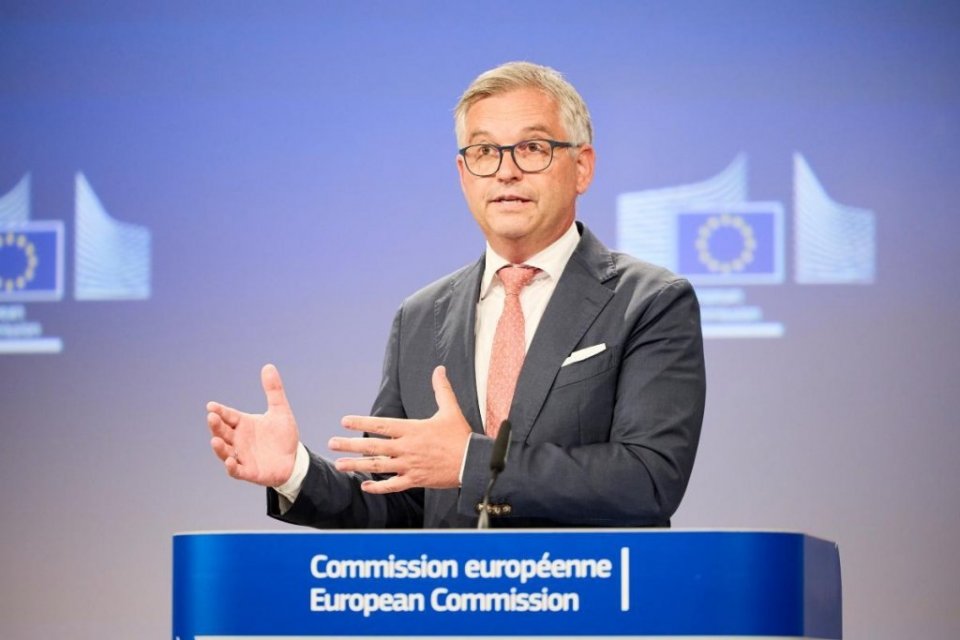
European Commissioner for Migration Magnus Brunner (main image) described the influx as having been exploited by organised criminal groups, saying smugglers and human traffickers had fuelled the crisis through disinformation spread on social media.

‘There is an ongoing investigation of the matter (Morocco’s role in the massive break) in Spain. So I … can’t actually comment on that any further but there was of course some disinformation by the smugglers and the human traffickers, that’s what we know for sure,’ he said. ALSO READ: Spanish court opens security inquiry into Ceuta mass crossing as Morocco cites trafficking networks and false rumours.

Addressing reporters following three hours of talks with the bloc’s interior ministers, Brunner also said the Ceuta crisis had ‘tested’ Europe’s border security, its ‘resilience to disinformation’ and ‘solidarity’ among member states.

‘Europe, I think, has definitely passed this test,’ he said. ‘It was a crisis, but now fortunately, it has been resolved.’

French Interior Minister Laurent Nuñez said ministers had condemned attempts to use the crisis to deepen divisions between EU countries.

‘The divisions that we have heard over the weekend were not welcome and they were exploited by foreign countries,’ Nuñez told reporters. ‘But what I heard this morning reassured me.’

According to several EU diplomats familiar with the discussions, countries that had previously criticised Madrid adopted a notably more conciliatory tone after Spain’s handling of the situation and the rapid reduction in migrant numbers. 

Spanish Interior Minister Fernando Grande-Marlaska welcomed the outcome of the meeting, describing it as ‘entirely constructive’. He said around 70,000 of the 72,000 migrants who entered Ceuta had already returned to Morocco and stressed that the Schengen area had never been under threat because of the enclave’s unique border regime.

He also criticised Italy’s decision to suspend transport links, saying the restrictions were unjustified and expressing confidence they would soon be lifted.

Rejecting suggestions that the crisis had damaged Spain’s reputation, Grande-Marlaska declared: ‘Spain has come out looking like a strong, reliable partner. This isn’t a matter that depends on testosterone.’

The issue remains politically sensitive. Spain relies heavily on Morocco to control migration towards Ceuta, and the events have revived memories of May 2021, when thousands crossed into the enclave after Moroccan border controls were widely seen as having been relaxed during a diplomatic dispute linked to Western Sahara.

On Monday, Morocco rejected suggestions that it was responsible for the latest surge, arguing instead that Spain should have anticipated the consequences of a recent court ruling which found that migrants reaching Ceuta by swimming could not be immediately returned if no maritime barrier was in place.

Grande-Marlaska said Spain moved quickly to install a floating sea barrier following that ruling, while insisting Spanish intelligence had detected no signs that such a large-scale crossing was being organised in advance.

Ministers agreed that the EU should improve intelligence-sharing between member states, strengthen early-warning systems and expand monitoring of social media to identify migration surges sooner. They also called for enhanced cooperation with countries outside the EU and stronger protection of the bloc’s external borders.

Several governments also advocated tougher returns policies and faster progress on establishing return hubs outside the EU. Italy’s Interior Minister Matteo Piantedosi urged the bloc to adopt ‘new hub models for the external processing of asylum procedures and for returns in safe third countries’, while Denmark called for increased EU investment in border security.

Greece has also proposed allowing asylum procedures to be temporarily suspended during exceptional mass migration events. Prime Minister Kyriakos Mitsotakis argued in an opinion article published on Tuesday that the EU should permit temporary pauses in asylum registrations when faced with sudden large-scale arrivals.

Ireland’s Justice Minister Jim O’Callaghan, who chaired the meeting, said member states had demonstrated a shared commitment to tackling the challenge together.

‘The EU’s external borders are our shared responsibility, and migration requires a united European response,’ he said.

The European Commission is expected to assess the causes of the Ceuta crisis in greater detail before presenting possible new measures in September, including proposals to reinforce the role of the EU’s border agency, Frontex, and determine whether online disinformation played a significant role in encouraging or coordinating the mass crossings.

Meanwhile, humanitarian organisations have raised concerns about the conditions facing migrants who remain in Ceuta. Many have been sleeping on beaches and relying on public showers after initially finding little access to food or accommodation.

Although most migrants have since returned to Morocco, the crisis has once again highlighted the EU’s dependence on cooperation with North African countries to control migration, while exposing the political strains that can emerge when large-scale arrivals test the bloc’s external borders.

Enjoying the news from Spain in English? Add us as a preferred news source in Google.

Subscribe to the Weekly Newsletter from Spain in English.

Subscription Supporter Banner


Click here to get your business activity or services listed on our DIRECTORY.

Click here for further details on how to ADVERTISE with us.

Recent Posts

Studies says climate change dramatically increased likelihood of devastating Spain and France wildfires

News Desk

Spanish court opens security inquiry into Ceuta mass crossing as Morocco cites trafficking networks and false rumours

News Desk

Spain installs sea barrier as Ceuta slowly returns to normality and death toll rises to 72

News Desk

Two Spanish tourists among 13 killed in Peru sightseeing plane crash over Nazca Lines

News Desk

Ceuta crisis sparks emergency EU meeting requests as Sánchez rejects Schengen criticism

News Desk

Spain’s economy gathers pace with 0.7% second-quarter growth

News Desk

Leave a Comment