
Spain and Portugal have succeeded in reaching an agreement with the European Commission to cut electricity prices across the Iberian Peninsula, under an exemption allowing them to separate it from the price of gas.
According to the Spanish government, around 40% of households should benefit from the system, and between 70-80% of companies will be affected. The agreement limits the price of gas in the wholesale electricity market to 50 euros per megawatt hour.
‘We have reached a political agreement with the Commission,’ Spain’s Minister for Ecological Transition, Teresa Ribera, said at a press conference in Brussels with her Portuguese counterpart, José Duarte Cordeiro.
The deal, expected to come into force in the next few days, will help ‘strengthen the protection of Spanish and Portuguese consumers… who have a higher level of exposure to the evolution of the wholesale market’, she said.
As reported at the end of March, the European Union authorised Spain and Portugal to take ‘exceptional measures’ to reduce the price of gas used to produce electricity and to alleviate household energy bills, which are particularly high in the two countries.
The cost of energy has risen sharply in recent months in Spain and Portugal because of European electricity market rules, which force producers to sell their energy at the price of the most expensive technology — currently gas-fired power stations.
For months, Madrid and Lisbon have been fighting against this system, which was deemed unsuited to the energy situation on the Iberian Peninsula.
But several European countries were opposed to a reform, saying they feared the impact on competition within the EU.
The Iberian exception was approved in view of the two countries’ ‘particular situation’, as they have ‘energy mixes composed mainly of renewable energies and very few interconnections with the European market’, Commission President Ursula von der Leyen said.
Spain and Portugal are in a strategically advantageous position in that they’re not as dependent on Russian natural gas as many of their European neighbours, importing most of it from Algeria and other countries.
Spain is also the country with the largest gas storage and regasification capacity in Europe and together with Portugal is a renewable energy leader in terms of solar, hydraulic and wind power. Their energy markets are more self-sufficient and extremely well connected between both nations.
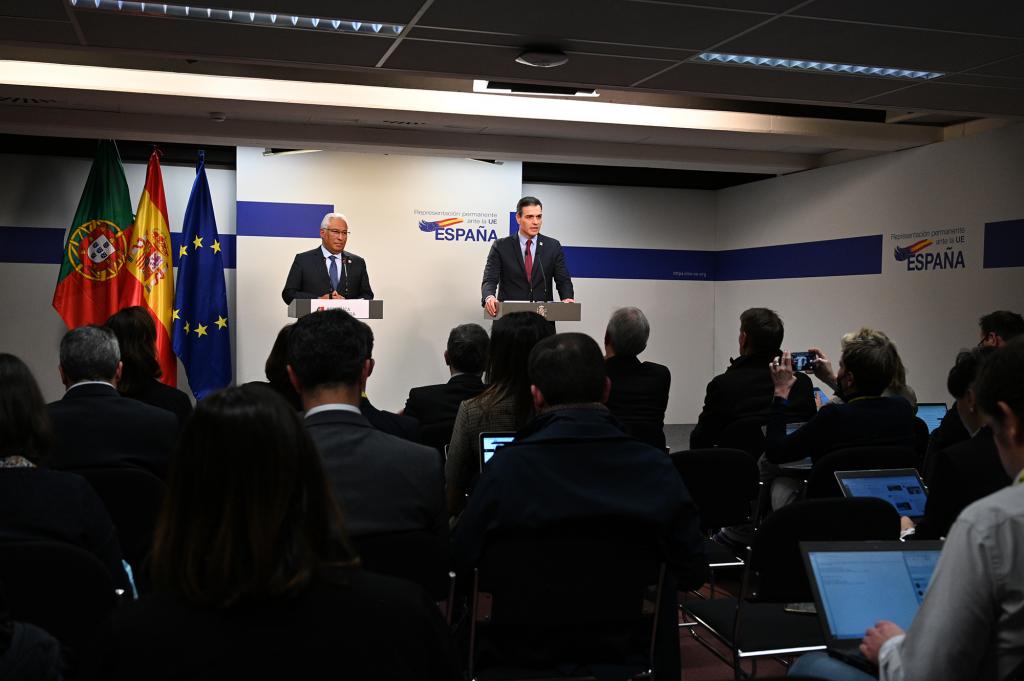
This has led the two countries that form the Iberian peninsula (as well as Andorra) to be referred to as an ‘energy island’ by Spanish Prime Minister Pedro Sánchez and his Portuguese counterpart António Costa, as a simplified way of describing why their countries should (and now have been) temporarily released from the EU’s common market rules.
Sign up for the FREE Weekly Newsletter from Spain in English.
Please support Spain in English with a donation.
Click here to get your business activity or services listed on our DIRECTORY.
Click here for further details on how to ADVERTISE with us.
