
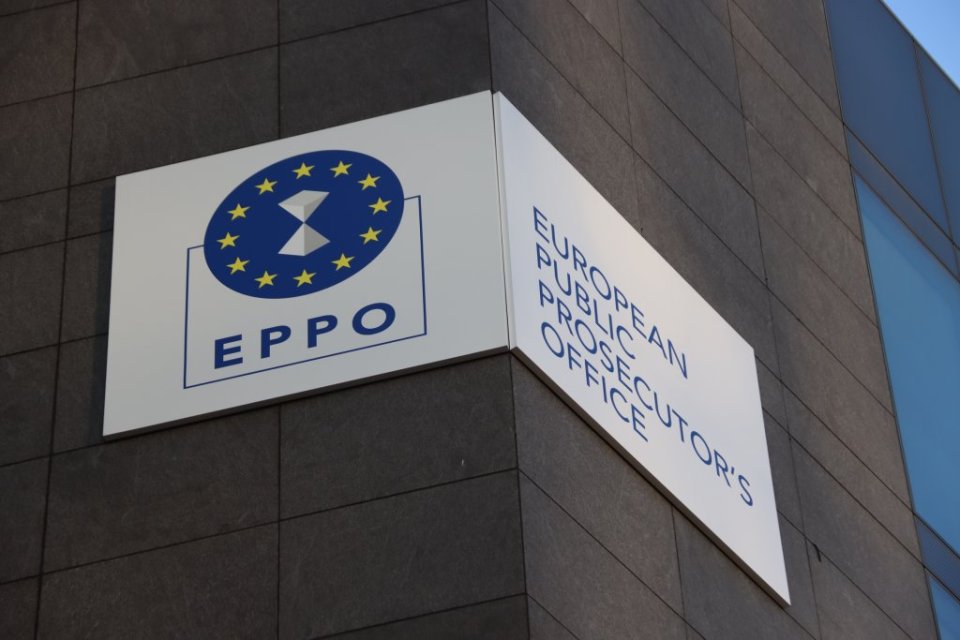
European prosecutors have launched a second investigation into suspected fraud involving EU funding for Spain’s Madrid–Seville high-speed railway, this time focusing on the modernisation of safety, signalling and communications systems following the crash at Urda that killed 69 people.
The European Public Prosecutor’s Office (EPPO) confirmed on Friday that investigators were gathering information at rail infrastructure manager Adif, the State Railway Safety Agency and Spain’s Court of Auditors. The inquiry was opened on prosecutors’ own initiative and is being supported by the Guardia Civil’s Central Operational Unit, known as the UCO.
It is the second European investigation into funding for the route, Spain’s oldest high-speed railway, which has suffered two fatal disasters within nine months, leaving a combined death toll of 115.
The latest crash occurred on 28 October near Urda, in the Toledo province of Castilla-La Mancha, approximately 130 kilometres south of Madrid. A Renfe train struck the rear of a stationary service operated by private rail company Iryo. The disaster, one of Europe’s worst railway accidents this century, has intensified scrutiny of rail safety ahead of Spain’s general election in November. ALSO READ: Twelve foreign nationals confirmed among 69 killed in Spain’s latest train tragedy.
The new financial investigation is separate from the Spanish judicial proceedings examining the causes of the crashes and any resulting criminal responsibility. The opening of the European inquiry does not establish that fraud occurred or that any misuse of funding caused either disaster.
Safety upgrade under scrutiny
According to Adif sources, the documents requested by investigators concern the ‘renewal of signalling and communications systems’ on the Madrid–Seville line. The infrastructure manager said it had provided ‘full cooperation’ in responding to the request.
Attention has focused on the line’s safety technology since the Urda collision, which followed a computer communications failure that brought down the LZB train protection system.
LZB continuously provides drivers with information governing permitted speeds and separation between trains, and can trigger automatic braking. It remains the principal train protection system on the Madrid–Seville route, where its replacement by the newer European Rail Traffic Management System, or ERTMS, is overdue.
ERTMS performs comparable safety functions and is the European standard being introduced across the rail network.
Adif put the replacement work out to tender and awarded the contract in 2021. Under the original timetable, the changeover should have been completed at the beginning of this year.
The contract, awarded to French company Thales for €93.83 million, covered signalling installations, ERTMS, traffic control equipment and fixed telecommunications on the route.
A list published by Spain’s Finance Ministry in 2023 identified Thales as one of the country’s largest recipients of Next Generation EU funding, with €119.7 million. That figure concerns the company’s funding allocation and is separate from the value of the Madrid–Seville contract.
Prosecutors have not disclosed which transactions, contracts or potential offences are being examined.
‘This exceptional confirmation comes following high public interest and no further details will be made public at this stage,’ the EPPO said.
Separate inquiry into funding after Adamuz crash
The first European investigation was opened in March following the rail disaster at Adamuz, in the Córdoba province of Andalusia, where 46 people died and dozens were injured. ALSO READ: Families of Adamuz train crash victims to receive €216,000 under €20m compensation plan.
That crash was attributed to a broken rail. The European inquiry concerns €111 million in EU funding received by Spain for general maintenance of the Madrid–Seville line.
Both EPPO proceedings concern the possible misuse of European money. The office is responsible for investigating and prosecuting offences affecting the EU’s financial interests.
Responsibility for investigating the crashes themselves rests with the Spanish courts. The Montoro Court is handling the Adamuz case, while the Orgaz Court is investigating the Urda collision.
Auditors previously questioned contract assessments
The new investigation also draws attention to earlier concerns raised by Spain’s Court of Auditors about Adif’s handling of contracts linked to European funding.
According to the Europa Press agency, a 2025 audit criticised the infrastructure manager’s response to two complaints alleging irregularities in the scores used to award contracts.
Adif opened two internal investigations and told the auditors that it had found ‘no indications that the applicable regulations had been breached’. It also commissioned an external expert assessment of the technical evaluations in the three procurement files concerned.
The Court of Auditors nevertheless found that the evaluation report lacked transparency and that the allocation of scores was insufficiently justified. Its findings warned that the absence of clear reasoning could allow decisions to be made in an ‘unjustified and arbitrary’ manner.
The EPPO has not publicly established any connection between those audit findings and the specific matters now under investigation.
Enjoying the news from Spain in English? Add us as a preferred news source in Google.
Subscribe to the Weekly Newsletter from Spain in English.
La Fiscalía Europea (EPPO) en Madrid 🇪🇸 ha abierto una segunda investigación por un posible fraude relacionado con los fondos de la UE destinados a la renovación de la línea ferroviaria de alta velocidad Madrid-Sevilla, en la que se produjo el trágico accidente la semana pasada.
— European Public Prosecutor’s Office (EPPO) (@EUProsecutor) November 6, 2026

Click here to get your business activity or services listed on our DIRECTORY.