
The Spanish government has pledged to make ‘every effort necessary’ to preserve SEAT as uncertainty continues over the future of one of the country’s most recognisable industrial brands.
The intervention follows reports earlier this month that parent company Volkswagen is considering phasing out the SEAT marque by the end of the decade as part of a wider restructuring of its European operations.
SEAT has stressed, however, that no final decision has been taken, while Volkswagen continues to examine several possible scenarios for the brand beyond 2030.
First Deputy Prime Minister and Economy Minister Carlos Cuerpo has described SEAT as a traditionally Spanish brand and said the government would do everything it could to ensure its continuation.
Prime Minister Pedro Sánchez had already underlined the company’s importance during a visit to its Martorell facilities in Catalonia during June, describing SEAT as an ‘iconic brand in Spain’ and a fundamental part of both the country’s industrial ecosystem and its identity.
The debate has also prompted concern from unions, business organisations and the Catalan automotive industry, although attention is increasingly turning to an important distinction: the possible disappearance of the SEAT brand would not necessarily mean the disappearance of SEAT S.A., its factories or its workforce.
Volkswagen’s plans remain undecided
The controversy began on 3 September after German business publication WirtschaftsWoche reported that an internal Volkswagen document envisaged SEAT being ‘phased out in an orderly manner with cost optimisation by the end of 2029 at the latest’, while continuing to provide servicing and other support to existing customers.
According to the report, SEAT’s products and production structures could progressively be transferred towards Cupra, the higher-margin brand created by SEAT and established as a separate marque in 2018.
SEAT S.A. subsequently pushed back against suggestions that the decision had already been made.
The company says ‘several scenarios remain possible beyond 2030’ and that ‘no decision has yet been taken’. Its eventual direction will depend on factors including European regulation, consumer demand, market conditions and the enormous investment required to develop new generations of electric vehicles.
For the immediate future, SEAT says its existing product programme will continue, including planned mild-hybrid versions of the Ibiza and Arona in 2027.
Cupra, meanwhile, is expected to remain the principal driver of growth and profitability for SEAT S.A.
What would happen to Martorell and its workers?
Much of the concern surrounding the SEAT name relates to the company’s huge industrial presence at Martorell, around 30 kilometres from Barcelona, and the potential consequences for employment.
Industry experts have cautioned, however, against assuming that ending the brand would mean closing the factory.
Volkswagen has invested heavily in Martorell and is transforming the site for the production of electric vehicles. In 2022, Volkswagen, SEAT S.A. and their partners in the Future: Fast Forward programme announced an investment programme worth around €10 billion to accelerate the electrification of Spain’s automotive industry. ALSO READ: Spain commits €1.3bn to push electric vehicle production and sales towards 2035 target.
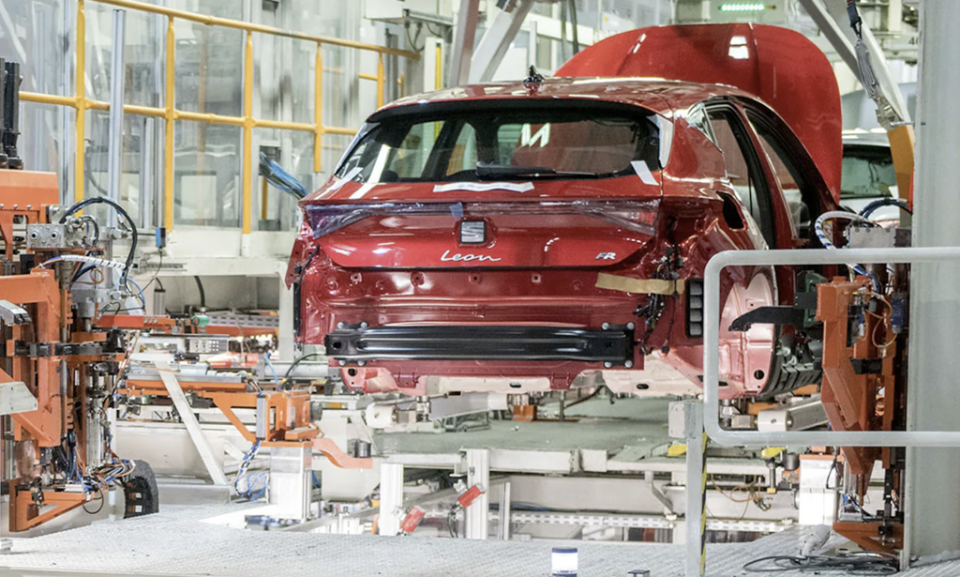
The plant produces roughly half a million vehicles annually and could continue manufacturing Cupra models or vehicles from other Volkswagen Group brands even if SEAT cars eventually disappear from showrooms.
The crucial issue would therefore be whether Volkswagen continues to allocate sufficient new models to Martorell.
Matías Carnero, president of SEAT’s works council and a member of the company’s supervisory board, has described securing future models as ‘essential’ if Volkswagen ultimately decides not to continue with the SEAT brand. Without them, he warned, the situation could become ‘critical’.
Carnero nevertheless remains confident in Martorell’s future, describing it as Volkswagen’s most technologically advanced, operationally efficient and productive plant, with a highly trained workforce.
Volkswagen itself has said that SEAT S.A. has a solid future within the group, irrespective of the eventual decision over the SEAT marque.
From Spanish national champion to Volkswagen brand
SEAT – originally Sociedad Española de Automóviles de Turismo – was founded on 9 May 1950, with the Spanish state among its original shareholders, and became closely associated with the country’s post-war industrialisation and the rapid expansion of private car ownership.
Models such as the SEAT 600 became symbols of Spain’s economic and social transformation, while later generations of cars including the Ibiza and León made the company one of Spain’s best-known brands internationally.
Volkswagen began acquiring SEAT in the 1980s, eventually taking full control of the company.
Today the SEAT range consists of the Ibiza, Arona, León, León Sportstourer and Ateca, using a mixture of conventional combustion engines, mild-hybrid and plug-in hybrid technology.
But the success of Cupra has progressively altered the balance within the company. Volkswagen has increasingly concentrated investment and marketing on the newer brand, while SEAT occupies a highly competitive part of the mass market and faces growing pressure from lower-cost manufacturers, particularly from China.
That challenge comes as Volkswagen itself undertakes a major cost-cutting programme amid weaker European demand, rising costs and intensifying international competition.
Government and unions push for SEAT’s survival
Spanish and Catalan institutions, unions and business organisations have nevertheless made clear that they want the SEAT name to survive.
UGT general secretary Pepe Álvarez has expressed concern about both the brand’s future and Volkswagen’s wider restructuring plans, while SEAT unions have warned they would strongly oppose any decision to eliminate the marque.
Catalan business organisations have similarly called for the historic brand to be protected.
The Spanish government has stopped short of suggesting that the state should take a direct role in SEAT’s management. Secretary of State for Industry Jordi García has ruled out the government joining the company’s board.
For now, therefore, there are two separate questions hanging over SEAT: whether the familiar Spanish car brand will survive beyond the end of the decade, and what Volkswagen intends to manufacture in Spain in the years that follow.
The first remains uncertain. On the second, both Volkswagen’s investment in electrification and the strategic importance of Martorell provide considerably more grounds for confidence.
SEAT’s future beyond its current production cycle remains under review, with the company maintaining that all options are still open.
Enjoying the news from Spain in English? Add us as a preferred news source in Google.
Subscribe to the Weekly Newsletter from Spain in English.
En un 600 muchas familias llegaron por primera vez a la playa, con las piernas encogidas y las maletas atadas al techo. Si ese recuerdo se les queda lejos, prueben con otro número, el 127.
— Telediarios de TVE (@telediario_tve) September 3, 2026
Ahora, Volkswagen se plantea retirar la marca SEAT por las dificultades del grupo. pic.twitter.com/9C7GVOO7ur
Exigimos a Volkswagen un compromiso real con SEAT
— CCOO de Industria #PactoIndustriaYA (@Industria_CCOO) September 9, 2026
👉🏽Debe asumir su responsabilidad con Martorell y con las personas trabajadoras
👉🏽Debe sellar un acuerdo de futuro, inversiones y nuevos proyectoshttps://t.co/7AJZVT6k1X pic.twitter.com/B1zTO0KfT7
Carlos Cuerpo, sobre Seat: “Nosotros pondremos sobre la mesa todo el esfuerzo necesario para ser capaces de mantener esta marca y este sello porque es un sello genuinamente español” https://t.co/YG2YEjFBeX#LosDesayunosRTVEEFE pic.twitter.com/7r7YjEchoK
— RTVE Noticias (@rtvenoticias) September 7, 2026

Click here to get your business activity or services listed on our DIRECTORY.