
Spain has called on the European Union to establish a dedicated fund for adapting to climate change, introduce legally binding resilience targets and strengthen its collective response to extreme weather, warning that Europe can no longer afford to rely on emergency measures after disasters have occurred.
The proposals, submitted to European Climate Commissioner Wopke Hoekstra, come after a summer of severe heatwaves, wildfires and drought across the continent. Madrid argues that climate adaptation must become a central part of the EU’s economic, security and investment policies, rather than remain a secondary environmental consideration. ALSO READ: Pedro Sánchez visits wildfire-hit Galicia and pledges ‘national pact’ to address climate emergency.
Spain is seeking to influence both the European Commission’s forthcoming climate resilience framework and negotiations over the EU’s next seven-year budget, covering 2028–2034. Among the possible sources of funding it has suggested are levies on oil and gas profits and, potentially, common European debt instruments. ALSO READ: PP and Vox reject Sánchez’s national climate pact as prime minister defends government’s record.
Mounting economic and human costs
The Spanish government estimates that climate change and extreme weather have caused €822 billion in losses across EU countries since 1980, with approximately a quarter of that total recorded between 2021 and 2024, the latest period covered by the figures.
Spain itself has been among the European countries most exposed to increasingly intense summer temperatures, prolonged drought and destructive wildfires.
The wider European impact this year has also been substantial. Excess deaths associated with heatwaves reached roughly 30,000, according to European national health data and the EuroMOMO mortality monitoring platform. ALSO READ: Nearly 4,500 heat-related deaths recorded in Spain, as Germany, France and Italy also suffer.
More than 600,000 hectares have burned across the EU, according to European Commission figures, more than double the long-term average over the past two decades. ALSO READ: Studies says climate change dramatically increased likelihood of devastating Spain and France wildfires.
Drought has also disrupted essential infrastructure and economic activity. Low water levels in the Danube led to the shutdown of nuclear power plants in Hungary and Romania, while reduced water levels in the Rhine interfered with commercial transport. ALSO READ: Climate change driving record ocean temperatures around Europe, study finds.
Climate Commissioner Hoekstra has cited estimates placing the economic damage from wildfires at between €50-€70 billion or more, underlining the financial stakes of improving Europe’s preparedness.
Spain wants adaptation to become a binding EU obligation
The EU has already committed to achieving climate neutrality by 2050 and reducing greenhouse gas emissions by at least 55% from 1990 levels by 2030. Its existing Adaptation Strategy, adopted in 2021, is now being updated and expanded by the European Commission into an Integrated Climate Resilience Framework, which is expected to be presented to member states by the end of the year.
Spain wants that framework to go beyond general commitments and establish enforceable obligations.
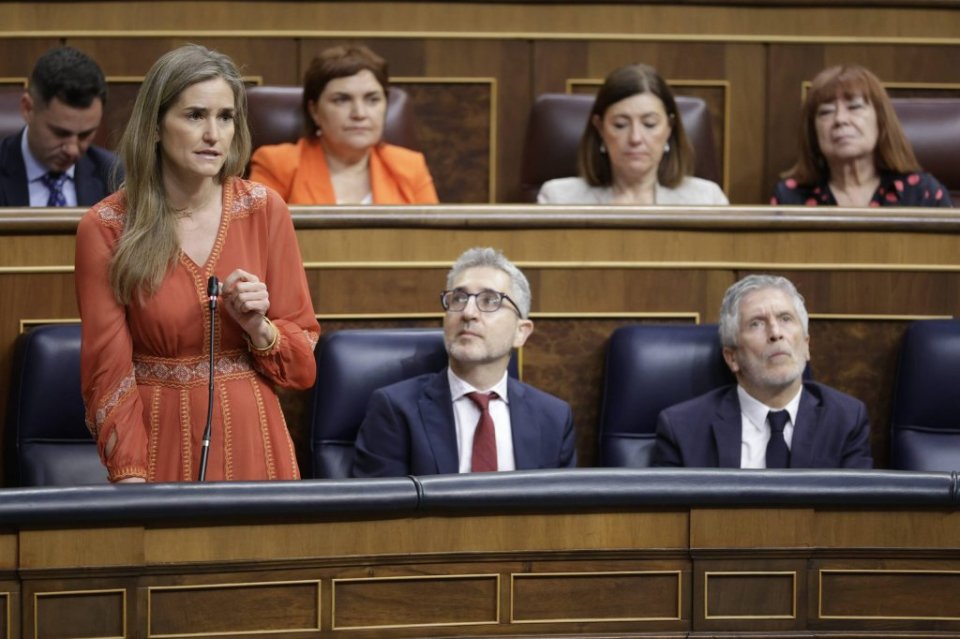
In a letter to Hoekstra (see link below), Environment Minister Sara Aagesen (main image) argued that reactive policies were no longer sufficient to safeguard Europe’s security, prosperity and competitiveness.
‘Our proposal puts forward a comprehensive approach to anticipating and assessing climate risks, integrating resilience into planning and investment decisions, strengthening our collective response to emergencies, and creating the necessary financial conditions to drive adaptation across Europe,’ the letter said.
Aagesen, Spain’s Minister for the Ecological Transition and the Demographic Challenge, also said that ‘we need a comprehensive approach to anticipate and assess’ climate risks ‘for the sake of the present and future generations’.
‘There are no solutions without a good diagnosis, so we propose (to the European Commission) to carry out a risk analysis at the European, national and regional levels into planning and all investment decisions,’ she said.
Regular risk assessments and tougher investment rules
Under Madrid’s proposals, climate risk assessments would be carried out every five years at European, national and regional levels. Their findings would then be incorporated into public planning, infrastructure, land-use policies and investment decisions.
The intention is to ensure that future climate risks are considered before projects are approved, rather than being treated as an administrative exercise after decisions have already been taken.
Spain is also calling for binding short-, medium- and long-term adaptation targets. The initial priorities would include water, health, infrastructure, forests, tourism, agriculture, fisheries and biodiversity.
Another proposal would strengthen the EU’s existing ‘do no significant harm’ principle, which requires economic activities and investments to avoid substantial environmental damage. Madrid wants the principle expanded to include climate resilience, so that projects must also take account of their exposure to future climate-related risks.
A permanent European climate emergency system
Spain is seeking a substantial upgrade to the EU’s disaster-response capabilities, including transforming the existing civil protection mechanism, rescEU, into a permanent European climate emergency response system.
The proposed system could include a dedicated shared aerial firefighting fleet, common emergency equipment, coordinated data systems and standardised disaster-response protocols. ALSO READ: Sánchez unveils Spain’s largest anti-wildfire operation after devastating 2025 fires.
Madrid also wants the EU to examine financial mechanisms that would help governments and businesses absorb the costs of extreme weather. These include a European public-private reinsurance scheme and climate-risk bonds.
Such measures would be intended to improve the availability of insurance and spread the financial burden of disasters that are becoming increasingly expensive to manage.
How would the new adaptation fund be financed?
The creation of a European Climate Adaptation Fund is likely to be one of the most politically sensitive elements of Spain’s proposal.
Madrid has suggested exploring new EU revenue sources, including a charge on oil and gas profits, while also leaving open the possibility of common European debt instruments. The government argues that adaptation requires predictable, dedicated financing rather than reliance on existing budgets or emergency spending.
The proposal comes amid wider debate over the EU’s future environmental funding. Environmental organisations have criticised the Commission’s decision to cut previous funding for nature through the LIFE programme and instead draw on resources from the European Competitiveness Fund.
The Commission has said that climate adaptation funding forms part of the ongoing EU budget negotiations. It has also pointed out that windfall taxes on energy companies fall within the competence of individual member states.
Spain’s proposal nevertheless follows a separate initiative by six EU countries seeking discussions on taxing exceptional oil company profits. Last month, Spain, Germany, Portugal, Italy, Poland and Austria asked the EU presidency to hold talks in September on a mechanism to tax windfall profits arising from Iran’s blockade of the Strait of Hormuz.
Budget negotiations will determine what is possible
Spain’s initiative arrives as negotiations intensify over the EU’s multi-annual financial framework for 2028–2034.
The Irish presidency of the Council of the EU, which is currently coordinating discussions among member states, is expected to put forward a new compromise budget text by mid-October, when European leaders are due to meet in Brussels for a European Council summit.
Any final agreement on the seven-year budget will require the unanimous approval of all 27 EU member states, followed by the consent of the European Parliament.
Madrid’s position is that climate resilience should be treated as an investment in Europe’s future economic stability and security, rather than simply as an environmental expenditure.
At the same time, Spain has stressed that adaptation must remain closely linked to efforts to reduce greenhouse gas emissions. Its argument is that the effectiveness and affordability of measures designed to protect Europe from climate change will ultimately depend on limiting the extent of future warming.
Enjoying the news from Spain in English? Add us as a preferred news source in Google.
Subscribe to the Weekly Newsletter from Spain in English.
🟩 NON PAPER
— Transición Ecológica y Reto Demográfico (@mitecogob) September 4, 2026
🔹VP Sara Aagesen ha remitido a la Comisión Europea la propuesta de España para reforzar la respuesta frente a los riesgos climáticos
»» Un enfoque integral por una Europa más justa, unida, competitiva y segura frente al cambio climáticohttps://t.co/bSBXwF7vcx pic.twitter.com/p3DdM7s5jD

Click here to get your business activity or services listed on our DIRECTORY.