
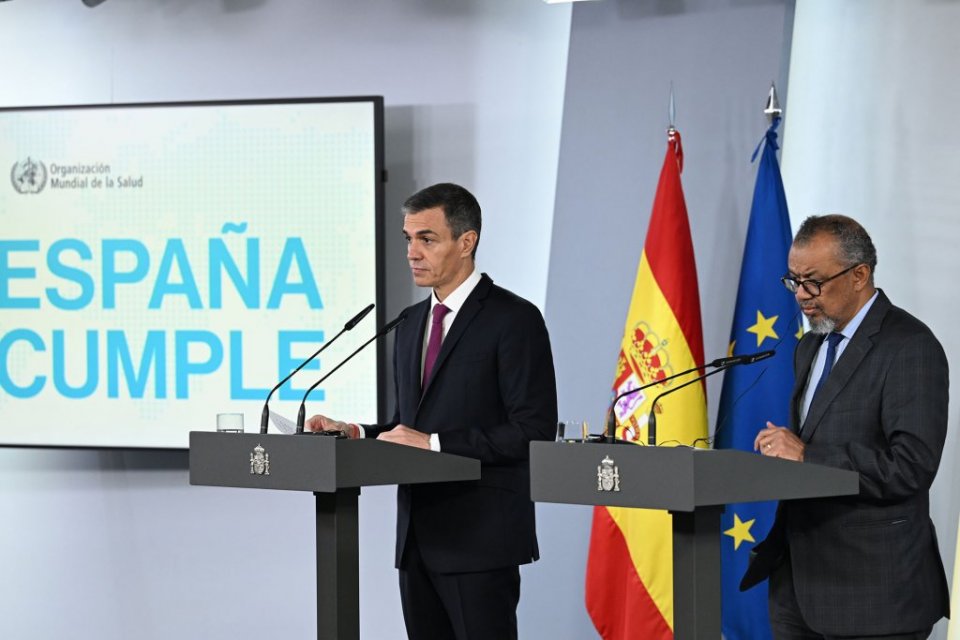
Tedros Adhanom Ghebreyesus, the head of the World Health Organization (WHO), warned in Madrid on Tuesday that efforts to contain the hantavirus outbreak linked to the cruise ship MV Hondius were still ongoing, after additional positive cases emerged following the vessel’s evacuation in Spain’s Canary Islands.
The situation surrounding the MV Hondius has drawn international concern after three passengers died during the outbreak of the rare virus, which currently has neither a vaccine nor a specific treatment.
However, health authorities have insisted the overall global health threat remains limited and dismissed suggestions that the situation resembles the early stages of the Covid-19 pandemic.
‘There is no sign that we are seeing the start of a larger outbreak,’ Tedros said during a joint press conference in Madrid alongside Spanish Prime Minister Pedro Sánchez (main image).
‘But of course the situation could change, and given the long incubation period of the virus, it’s possible we might see more cases in the coming weeks,’ Tedros said. ALSO READ: Spain defends hantavirus response after new cruise ship infections.
More than 120 passengers and crew members from the MV Hondius were flown out of the Canary Islands on Sunday and Monday, with governments around the world adopting varying protocols for returning evacuees. ALSO READ: Hantavirus cruise passengers flown home from Canary Islands under strict precautions.
Spain’s health ministry confirmed on Tuesday that a Spanish passenger evacuated from the ship had tested positive for hantavirus and was experiencing symptoms.
According to official data, seven confirmed cases have so far been identified among surviving passengers and crew from the vessel, while an eighth case is considered ‘probable’.
Most governments have adhered to WHO recommendations, which call for a 42-day quarantine period and close monitoring of anyone considered a high-risk contact.
In the United States, however, acting director of the Centres for Disease Control and Prevention, Jay Bhattacharya, indicated that American passengers returning from the ship would not automatically face quarantine measures.
‘I hope they (countries) will follow the advice and recommendations we are making,’ Tedros said in Madrid. Click here for the WHO’s full fact sheet on hantavirus.
The crisis aboard the MV Hondius also created diplomatic tensions, as several countries debated responsibility for accepting the vessel and treating those onboard.
Cape Verde declined to receive the ship, which remained anchored off the coast near the capital Praia after three infected passengers were airlifted to Europe last week.
Spain later authorised the vessel to anchor off the island of Tenerife to allow the evacuation of passengers and crew over Sunday and Monday, although the move was strongly criticised by the regional government of the Atlantic islands. ALSO READ: Canary Islands reject virus-hit cruise ship as Madrid pushes ahead with docking plan.
Defending the decision, Sánchez said the ‘world does not need more selfishness or more fear. What it needs are countries that show solidarity and want to step forward’.
Enjoying the news from Spain in English? Add us as a preferred news source in Google.
Subscribe to the Weekly Newsletter from Spain in English.
.@WHO’s assessment on #hantavirus continues to be that the risk to health globally is low.
— Tedros Adhanom Ghebreyesus (@DrTedros) May 12, 2026
My latest update ⬇️ pic.twitter.com/gnm9pbqaF3
España cumple. Siempre cumple. Con los nuestros y con el resto del mundo.
— Pedro Sánchez (@sanchezcastejon) May 12, 2026
Este es el país que somos. Y del que estamos orgullosos.
Gracias, @DrTedros, por tu liderazgo y por ser ejemplo de lo que significa la cooperación internacional pic.twitter.com/G5OwZHLpRK

Click here to get your business activity or services listed on our DIRECTORY.