
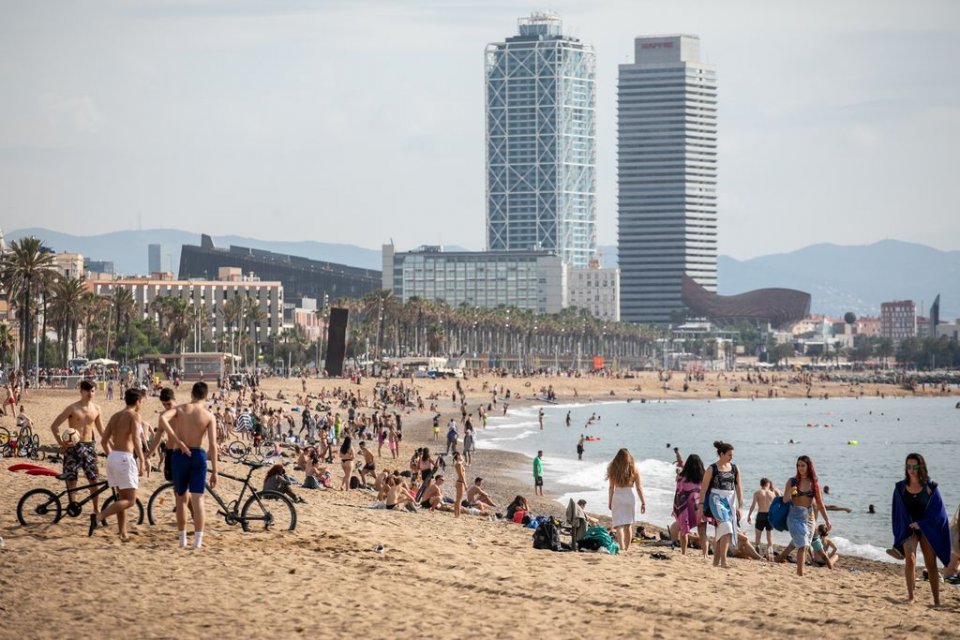
Spain and Portugal are seeing a sharp rise in late spring and summer travel demand, as millions of tourists shift away from destinations affected by conflict in and around the Middle East, according to industry data.
Figures from digital travel marketing platform Sojern show that summer flight bookings to Spain — including transit passengers — jumped 32% year-on-year as of 2 April, while hotel searches increased by 28%. Portugal also recorded strong growth, with flight bookings up 21% and hotel searches rising 16%.
Travel analytics firm Mabrian reported a decline in demand for Middle Eastern destinations last month, alongside growing interest in the southern Mediterranean. Spain, which competes with France as the world’s most visited country, appears to be the main beneficiary of this shift. ALSO READ: Spain sets new tourism record with 96.8 million foreign visitors in 2025, spending €134.7 billion.
By contrast, the eastern Mediterranean has been hit by cancellations. This includes Cyprus, where a drone strike targeted a British air base on 2 March, underlining the wider impact of the Iran war on regional travel. ALSO READ: Spain to send frigate to Cyprus to ‘offer protection’ and ‘support any evacuation of civilians’.
Spain’s tourism lobby group Exceltur has slightly raised its forecasts since the Iran conflict began on 28 February. While the upgrade is modest, it comes at a time when inflation and geopolitical uncertainty are weighing on consumer spending and travel plans.
‘Summer holidays are planned months in advance. As destinations that attract large numbers of tourists are affected by the conflict, a significant part of this safe-haven effect is already materialising in purchases and bookings to Spain,’ Exceltur Vice President Oscar Perelli said.
The Middle East and eastern Mediterranean typically attract up to 181 million tourists each year, while Spain alone welcomed a record 97 million visitors in 2024.
Exceltur now expects Spain’s tourism sector to grow by 2.5% in real terms this year, reaching 227 billion euros, up slightly from its previous 2.4% estimate and last year’s 2.1% growth. The group estimates that diverted travellers could contribute an additional 4.2 billion euros to the sector in 2025.
Tourism remains a cornerstone of Spain’s economy and is projected to outpace overall economic growth, which is forecast at 2.3%.
The country’s main hotel association, CEHAT, expects occupancy rates to increase by as much as 3% this summer.
‘Tourists are choosing destinations farther from Mediterranean conflict zones, such as the Canary Islands, for their summer family holidays,’ said CEHAT President Jorge Marichal, though he cautioned that overall travel demand could still decline.
Airlines are also ramping up capacity. According to Spain’s official tourism body Turespaña, seat availability in April is nearly 6% higher than a year ago, with the biggest increases on routes from the United States and Britain.
However, rising jet fuel costs and ongoing disruption at Middle Eastern transit hubs could limit the upside, Exceltur warned. ALSO READ: Spain signals support for EU jet fuel sharing as imports from US & Nigeria increase.
Marichal was more direct: ‘It will all depend on what happens in the Strait of Hormuz, because all these forecasts could go out the window.’ The strategically vital waterway — through which roughly one-fifth of global oil and gas exports pass — has been largely shut during the Iran war.
Enjoying the news from Spain in English? Add us as a preferred news source in Google.
Subscribe to the Weekly Newsletter from Spain in English.

Click here to get your business activity or services listed on our DIRECTORY.