
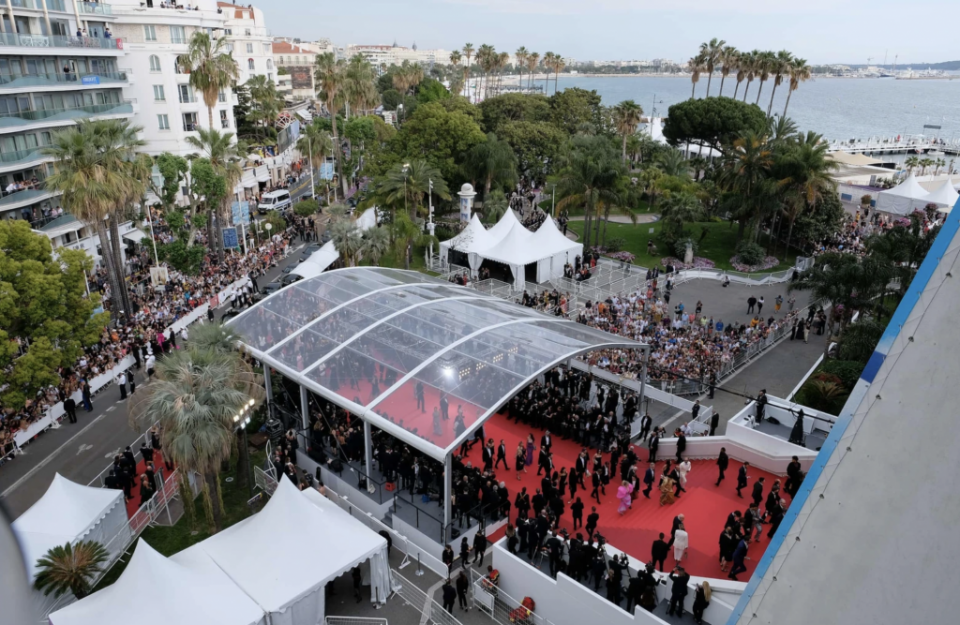
Spanish cinema will make history at this year’s Cannes Film Festival, with three films competing for the Palme d’Or for the first time since the prize was created in 1955 — underlining the country’s growing influence on the global stage.
Festival director Thierry Frémaux unveiled a 21-film Official Competition on Thursday that includes leading auteurs such as Iran’s Asghar Farhadi, Japan’s Hirokazu Kore-eda and Russia’s Andrey Zvyagintsev. Yet Spain stands out as one of the dominant forces in this year’s line-up, alongside Japan, with three films in contention for the festival’s top prize.
At the forefront is Pedro Almodóvar, a Cannes regular, who returns with Amarga Navidad. He is joined by Rodrigo Sorogoyen, competing for the first time with El ser querido, a drama starring Javier Bardem and Victoria Luengo. ALSO READ: Spanish actor Javier Bardem sparks applause with ‘no to war’ and ‘free Palestine’ remark at Oscars.
Perhaps the biggest surprise is the inclusion of Javier Calvo and Javier Ambrossi — known as the Javis — whose second feature, La bola negra, has secured a place in the Official Competition despite their relatively limited filmography. Their ambitious three-part drama, inspired by an unfinished work by Federico García Lorca, is among the most anticipated Spanish releases of the year.
The Javis’ growing international profile — boosted by the success of La mesías, which was a hit in France — has helped propel them into Cannes’ most exclusive circle. Their selection reflects what Frémaux described as a broader movement within Spanish cinema to secure the budgets and backing needed to produce ambitious, internationally competitive films.
This marks the first time that three Spanish films have competed for the Palme d’Or in a single year. The previous record was two, although four Spanish titles were screened at Cannes in 1951 and 1954 — before the introduction of the Palme d’Or and at a time when the global film industry was far smaller.
Spain’s presence extends beyond the main competition. In the Una cierta mirada section, two international co-productions underline the country’s continued reach: El deshielo, directed by Chile’s Manuela Martelli and produced by María Zamora, and La más dulce, by Laïla Marrakchi, featuring Spanish actress Itsaso Arana.
Despite Spain’s strong showing, the overall competition remains fiercely contested. Alongside Almodóvar and his compatriots are established Cannes favourites such as Farhadi and Kore-eda, as well as Romanian Palme d’Or winner Cristian Mungiu, who returns with Fjord, starring Renate Reinsve. There is also significant anticipation around Zvyagintsev’s comeback film Minotauro following a hiatus.
Notably, major Hollywood studios will be largely absent from the French Riviera this year. ‘The United States will be represented. The studios a bit less,’ Frémaux said, as Cannes once again leans toward auteur-driven international cinema.
Outside the main competition, the festival will feature an eclectic mix, including documentaries on football icon Eric Cantona and the infamous 1986 World Cup clash between England and Argentina. American stars will appear more sparingly, although Woody Harrelson and Kristen Stewart are set to feature in Full Phil by French director Quentin Dupieux.
This year’s jury will be chaired by South Korean filmmaker Park Chan-wook, the first from his country to take on the role. Meanwhile, Hollywood legend Barbra Streisand and The Lord of the Rings director Peter Jackson will receive Honorary Palme d’Or awards.
Frémaux also pointed to broader thematic trends across the selection, highlighting a mix of historical storytelling and films offering escapism from current global tensions. ‘We realised that the Western world needs gentleness, songs, nature, and that the countries of the Global South … need security, need prosperity and need to provide care for children and families,’ he said.
Yet one issue continues to cast a shadow over the festival: gender parity. Of the 21 directors announced so far in the Official Competition, only five are women — a figure that may shift slightly as last-minute additions are confirmed in the coming weeks. As Frémaux noted, the current line-up represents ‘95% of the selection’.
For Spain, however, the headline is clear: a record-breaking year at Cannes that confirms its cinema is not only thriving at home, but commanding attention at the very highest level of international filmmaking.
Click here for a full list of the Cannes films competing for the top prize.
Enjoying the news from Spain in English? Add us as a preferred news source in Google.
Subscribe to the Weekly Newsletter from Spain in English.
¡Nuestro cine hace historia en Cannes!
Almodóvar, Sorogoyen y Los Javis competirán por la Palma de Oro esta 79 Edición. Desde la creación del premio en 1955 nunca han competido tantas películas españolas.
Bravo por tanto talento. https://t.co/Qs72pS2vzx
— Pedro Sánchez (@sanchezcastejon) April 9, 2026

Click here to get your business activity or services listed on our DIRECTORY.