
Spain’s governing socialist (PSOE) party is confronting a wave of sexual misconduct and prostitution scandals that now threaten one of its defining political pillars — its reputation as a defender of gender equality — and could undermine the crucial support it enjoys among women voters.
The uproar dates back to the summer, when leaked audio captured former transport minister José Luis Ábalos — once a key ally of Prime Minister Pedro Sánchez — and his aide Koldo García using crude terms while arranging encounters with prostitutes.
Those recordings surfaced in the midst of a broader corruption inquiry involving both men, who are already set to face trial in a case that had shaken the administration even before the latest revelations. ALSO READ: Spain’s former transport minister detained without bail in corruption investigation.
In the fallout, the PSOE issued an internal ban on party members using prostitution services, something Spanish law does not explicitly prohibit. ALSO READ: Spain’s sex club owners and workers protest government’s prostitution bill.
Not long after, the prime minister’s office quietly removed a senior adviser, Francisco Salazar, over ‘inappropriate sexual behaviour’. ALSO READ: Sánchez battles to control PSOE crisis, as claims of sexual harassment force a new resignation.
Women who lodged complaints have come forward in recent days, accusing the party of leaving their reports unaddressed for months. One recounted that Salazar would emerge from the bathroom and pause with his fly undone close to women’s faces. Another said his behaviour was ‘misogynistic’ and his language ‘hypersexualised’.
The misconduct allegations have also spread beyond Madrid, with complaints targeting PSOE officials near Málaga in the south and in the northwestern province of Lugo.
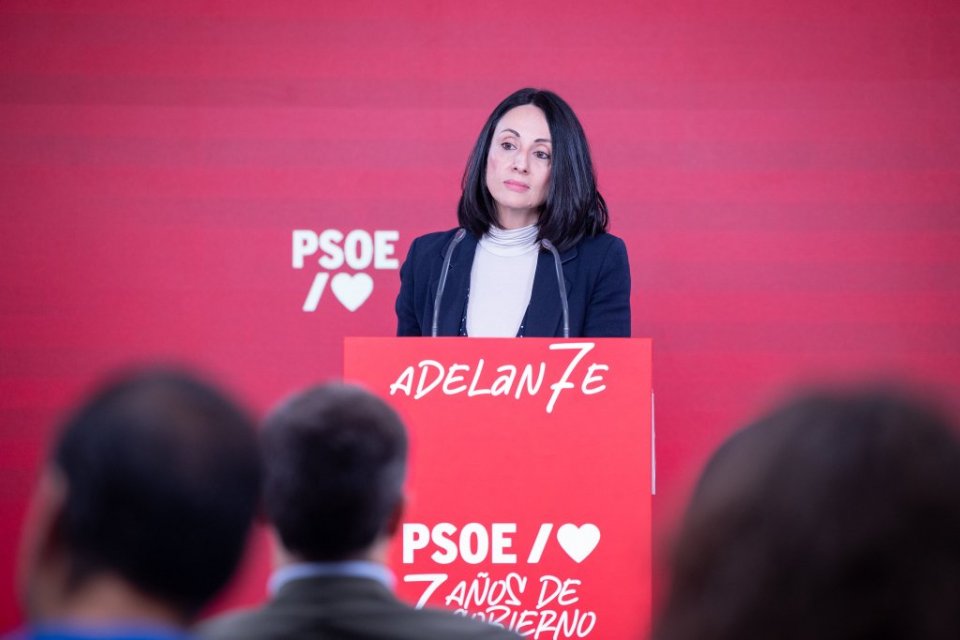
Amid the mounting scandals, the party’s organisation secretary, Rebeca Torro (main image), acknowledged on Friday that the PSOE had reached a ‘turning point’. At a press briefing to announce tighter harassment protocols, she insisted: ‘Disrespecting women and engaging in sexist behaviour is incompatible with being a socialist.’
Sánchez, speaking in parliament on Wednesday, defended his record, saying that ‘feminism gives all of us lessons — myself included’. He added, ‘We acknowledge our mistakes when they happen and act accordingly.’
According to data from the government-funded CIS polling agency, women accounted for 56% of PSOE voters in the 2023 general election — a demographic advantage that analysts say the party can no longer take for granted. The risk, they warn, is a narrowing of the historically large gender gap that has favoured the socialists over the right-wing People’s Party (PP).
Rebuilding trust among women will be difficult. In October, Sánchez unveiled a plan to codify abortion rights in the Spanish Constitution to shield them from potential political reversal — a move widely interpreted as an effort to shore up support among female voters. But his minority government lacks the parliamentary numbers to advance the reform, which the right opposes. ALSO READ: Spanish government proposes including the right to abortion in the constitution.
The unfolding scandals have handed the PP — which routinely calls for Sánchez’s resignation and snap elections over corruption cases around him — a potent new line of attack.
Subscribe to the Weekly Newsletter from Spain in English.
La secretaria de Organización del PSOE, @Rebeca_Torro, anuncia el refuerzo de los canales de denuncia por acoso dentro del PSOE.
— PSOE (@PSOE) December 12, 2025
➕ Info. en la web:https://t.co/a90arK61jW pic.twitter.com/B11pKTcBti
Quien crea que esto solo atañe al PSOE, es que no ha entendido nada de esta terrible realidad.
— Rebeca Torró/❤️ (@Rebeca_Torro) December 12, 2025
Esto es un antes y un después. Y ese después lo vamos a liderar las mujeres socialistas con toda la fuerza del partido detrás. pic.twitter.com/Gbz6anjUwi

Click here to get your business activity or services listed on our DIRECTORY.