
The Spanish government has approved a €5 billion package of emergency measures aimed at softening the economic fallout from the conflict in the Middle East, particularly its impact on soaring energy prices.
The plan, adopted during an extraordinary cabinet meeting on Friday, comes as fuel and electricity costs surge following disruptions linked to the closure of the Strait of Hormuz. Gas prices have climbed by more than 60% since US and Israeli attacks on Iran began on 28 February, placing significant pressure on households and businesses. ALSO READ: Spain rejects participating in military operations in Strait of Hormuz, urges de-escalation.
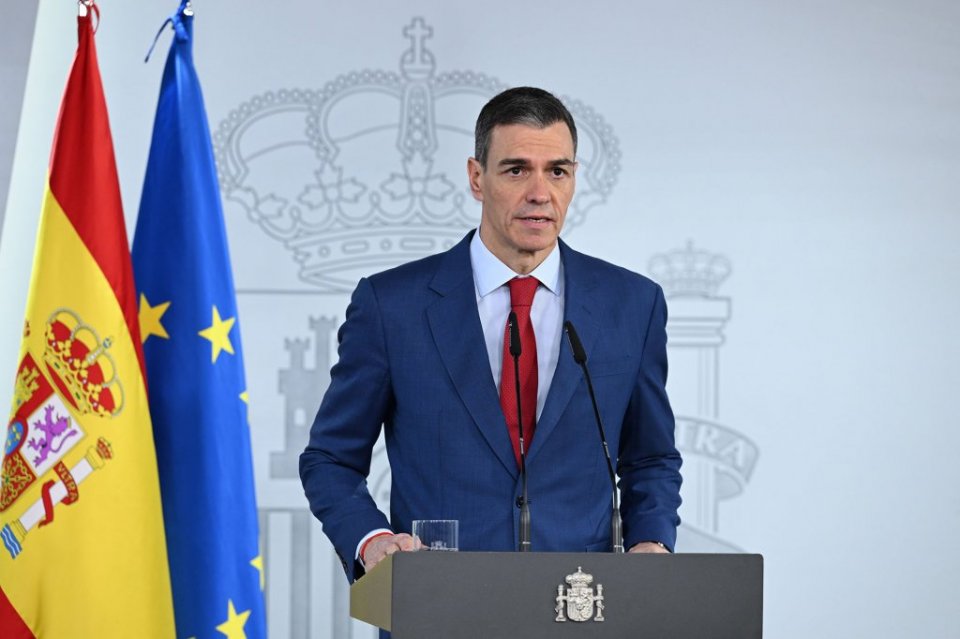
Prime Minister Pedro Sánchez said the measures are designed both to ease the immediate burden on consumers and to protect the sectors most exposed to rising energy costs, while also reinforcing Spain’s longer-term transition toward renewable energy.
Among the key steps is a sharp reduction in VAT (IVA in Spain) on electricity, gas and fuel from 21% to 10%, a move expected to cut fuel costs by up to 30 cents per litre depending on the type. For drivers, this could mean savings of around €20 per average tank.
Additional support includes direct fuel subsidies of 20 cents per litre for the agricultural and transport sectors, as well as equivalent aid for fertiliser purchases and increased flexibility in energy supply contracts. Industries with high electricity consumption will benefit from an 80% rebate on tolls, reflecting their vulnerability to energy price spikes.
The government has also extended the electricity social bonus until December 2026 and pledged to ‘substantially strengthen’ the thermal, or heating, bonus. Vulnerable households will be protected from energy supply cuts, while a maximum price will be set for bottled gas.
Authorities estimate the measures will benefit around 20 million households and 3 million companies nationwide.
Sánchez emphasised that the package combines short-term relief with structural reforms, including incentives to accelerate decarbonisation and energy independence. These include a ‘massive’ expansion of income tax deductions for installing solar panels, heat pumps and electric vehicle charging points, as well as support for improving building efficiency and scaling up renewable energy deployment.
‘Today we are more resilient thanks to the deployment of renewables, and we must continue on this path,’ the prime minister said.
At the same time, regulators will be given greater powers to monitor and penalise companies that attempt to exploit the crisis through excessive pricing.
Despite the scale of the intervention, Sánchez expressed frustration at the broader situation, linking the economic strain directly to the conflict. He said the measures would remain in place as long as needed but warned that ‘no plan can neutralise the misery of this illegal war’. ALSO READ: Pedro Sánchez responds to Donald Trump: ‘No to war’.
‘These are 5 billion euros that we could be allocating to scholarships, healthcare, and long-term care. I’m very, very angry with the situation,’ Sánchez said, noting that much of the cost stems from lost tax revenue that would otherwise fund public services. ALSO READ: Pedro Sánchez urges ‘loyal cooperation’ not ‘confrontation’ with US amid tensions over Iran war.
The emergency package will require parliamentary approval and comes at the expense of Spain’s annual budget presentation, which Sánchez has postponed in order to prioritise the crisis response.
Political tensions have also surfaced within the governing coalition. The left-wing Sumar party had threatened to oppose the measures unless they also tackled rising housing costs. In response, the government split off additional support for renters and vulnerable households into a separate package due to be presented to parliament next week.
However, Sánchez acknowledged that this second set of measures faces an uncertain path, with opposition parties on the right expected to resist its approval.
The executive will also provide aid for the acclimatization of buildings and for the acceleration of the installation of renewable energies.
Subscribe to the Weekly Newsletter from Spain in English.
El Plan Integral de Respuesta a la Crisis en Oriente Medio está dotado de unas 80 medidas, que entrarán en vigor mañana mismo, y que movilizarán más de 5.000 millones de euros.
Un plan que beneficiará a los 3 millones de empresas y a los 20 millones de hogares de nuestro país. pic.twitter.com/CgosMBy5dx
— Pedro Sánchez (@sanchezcastejon) March 20, 2026

Click here to get your business activity or services listed on our DIRECTORY.