
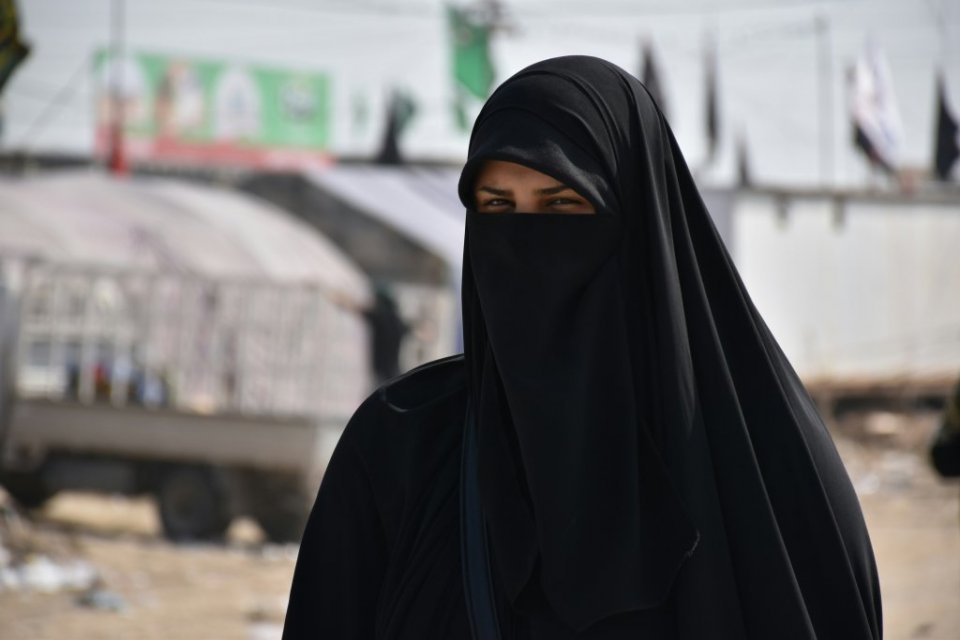
The Spanish Congress on Tuesday narrowly rejected a proposal to ban the burqa and niqab in public spaces, defeating a bill introduced by the far-right party Vox amid an increasingly polarised debate over religious dress, security and women’s rights.
The initiative failed by 177 votes to 170, with one abstention. It had been backed by Spain’s main opposition group, the right-wing People’s Party (PP), marking a notable shift in the party’s stance. PP leader Alberto Núñez Feijóo had described Vox’s framing of the issue as a defence of women’s dignity and called the idea ‘attractive’.
Vox argued that full-face veils erase women’s personal identity and can function as tools of submission, while also posing public-security risks.
The proposal sought a general ban on the burqa and niqab in public spaces and in private areas with public exposure.
It included financial penalties, possible prison sentences for those who coerce women into wearing the garments, and the potential expulsion of foreigners convicted of very serious or repeat offences. The measure explicitly excluded the hijab, which covers the hair but leaves the face visible.
Only the PP and the Unión del Pueblo Navarro (with one MP) supported the bill, alongside Vox. The governing PSOE socialists and their parliamentary allies, including Junts per Catalunya (JxCat), the Esquerra Republicana (ERC) party and the left-wing Sumar umbrella group, voted against it, while Coalición Canaria abstained.
JxCat’s vote proved decisive in blocking the initiative, despite the party sharing the objective of restricting full-face veils in public spaces.
JxCat argued that Vox’s proposal would not pass ‘any European filter’ and, on the same day, registered its own alternative initiative.
Unlike Vox’s bill, JxCat’s proposal does not establish a specific system of fines and avoids criminalising women who may be forced to wear the garments. Instead, it relies on existing disobedience laws and is limited to a single-article regulation focused on identification.
The party said its text is legally aligned with European standards and expressed hope that the PSOE would support it without lengthy negotiations.
Socialist MPs accused Vox of hostility and fear-mongering, arguing that bans do not liberate women but risk further marginalisation.
Second Deputy Prime Minister Yolanda Díaz warned during the debate that banning the burqa in public spaces could violate the Spanish Constitution, citing protections against discrimination and guarantees of religious freedom.
During the session, Vox leader Santiago Abascal accused Catalan pro-independence parties of prioritising what he called an ‘Islamic republic’ over women’s freedom. After the vote, he posted on X (see below):
‘This women’s prison was defended yesterday in Congress by the PSOE and other left-wing parties, in collaboration with JxCat that already encircle the Islamic Republic of Catalonia. They are all being given the word ‘feminism’ to talk about.’
Supporters of the ban pointed to precedents elsewhere in Europe, noting that countries such as Belgium, Denmark and France restrict full-face coverings on grounds of security and gender equality.
Subscribe to the Weekly Newsletter from Spain in English.
⚖️ Hem registrat una llei per prohibir el burca i el niqab als espais públics ajustada als standards europeus.
— Junts per Catalunya Congrés i Senat (@JuntsxCatMadrid) February 17, 2026
📺 Portaveu @miriamnoguerasM pic.twitter.com/y8fmYKHSNf
Esta cárcel para las mujeres fue defendida ayer en el Congreso por el PSOE y las demás izquierdas, con colaboración de Junts que ya abraza la República Islámica de Cataluña.
— Santiago Abascal 🇪🇸 (@Santi_ABASCAL) February 18, 2026
A todos ellos se les llena la boca con la palabra “feminismo”. pic.twitter.com/xqzN1iK4EE

Please support us with a donation.
Click here to get your business activity or services listed on our DIRECTORY.