
The Spanish government on Tuesday signed off on draft legislation aimed at tackling AI–generated deepfakes and tightening rules around consent for the use of images, as European countries intensify efforts to curb abusive artificial intelligence content.
The proposed law enhances safeguards for minors, establishes 16 as the minimum age at which a person can consent to the use of their own image, and restricts the reuse of online images as well as AI-generated voices or likenesses without explicit authorisation.
The move comes as the European Union advances its regulatory push on deepfakes, with forthcoming rules obliging member states to criminalise non-consensual sexual deepfakes by 2027.
‘The fact that people share personal or family images on social media does not give absolute freedom to use those images in other contexts,’ Justice Minister Félix Bolaños said, following a weekly cabinet meeting.
The reform also directly targets artificial intelligence, classifying as illegitimate the use of a person’s image or voice generated through AI for advertising or commercial purposes without consent.
Bolaños added that creative, satirical or fictional uses involving public figures would remain permitted, provided the content is clearly labelled as AI-generated.
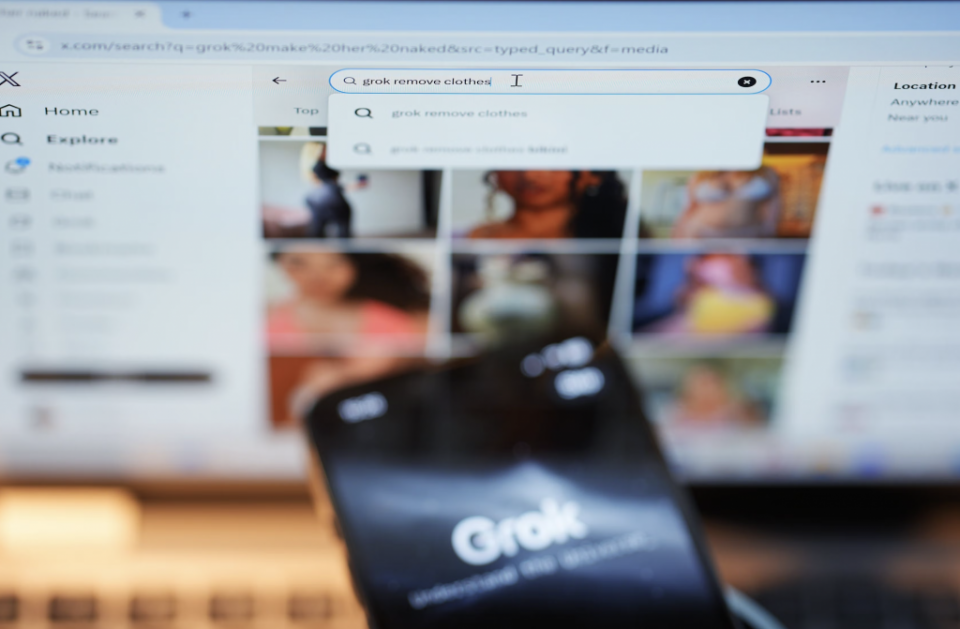
The legislation follows growing international scrutiny of AI tools, including Elon Musk’s company xAI, whose chatbot Grok is under investigation over the creation of sexually explicit deepfake images of women and children in varying states of undress.
xAI said late on Wednesday that it had now imposed restrictions on all users of its Grok AI chatbot that limit image editing.
‘We have implemented technological measures to prevent the Grok account from allowing the editing of images of real people in revealing clothing such as bikinis. This restriction applies to all users, including paid subscribers,’ the company said in an X post.
Earlier this month, the Spanish government asked prosecutors to determine whether certain AI-generated material could amount to child pornography — a request the Chief Prosecutor’s Office said it was reviewing, according to Spanish media.
The draft legislation must now pass through a consultation phase before returning to the cabinet for final approval and formal submission to parliament.
Subscribe to the Weekly Newsletter from Spain in English.
El Gobierno remite al @Congreso_Es la nueva norma que regulará el derecho a la rectificación ante informaciones falsas o inexactas.
— La Moncloa (@desdelamoncloa) January 13, 2026
Afectará tanto a informaciones en medios de comunicación tradicionales como en digitales y plataformas en línea. Nos lo detalla @felixbolanosg 👇 pic.twitter.com/ZNbghiIuyO

Click here to get your business activity or services listed on our DIRECTORY.