
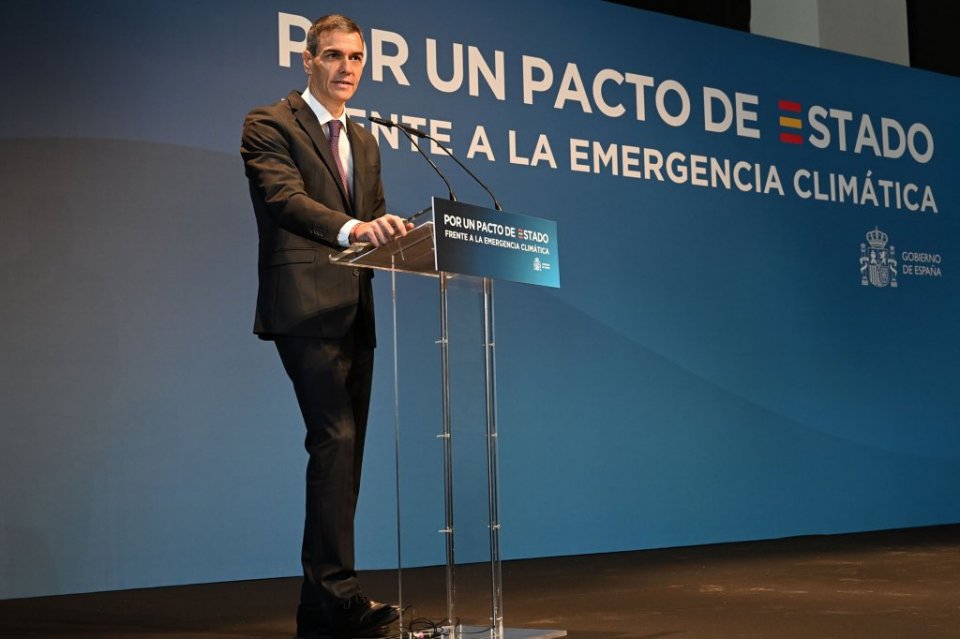
Prime Minister Pedro Sánchez said on Wednesday that Spain will create a nationwide network of climate shelters to protect residents from ever more intense and prolonged heatwaves.
‘Devastating droughts and heatwaves are no longer rare. Some summers, it’s not separate waves we face, but one long heatwave stretching from June through August. This is now the new normal,’ Sánchez told a climate conference in Madrid. ALSO READ: OECD warns climate change ‘increasingly threatens’ Spain’s dynamic economy.
‘Before next summer, we’re going to set up a nationwide network of climate shelters, using government buildings — especially from the central administration — and making them available to everyone,’ he added.
The prime minister said the central government would work alongside existing climate shelter initiatives run by regional administrations, including those in Catalonia and the Basque Country.
He also said funding would be directed toward shelters in neighbourhoods ‘that need them most, where the heat really hits people the hardest’.
Barcelona has been at the forefront of such efforts, establishing climate shelters in air-conditioned public spaces such as libraries, schools and other municipal buildings.
Spain endured its hottest summer on record this year, with average temperatures reaching 24.2 C, according to the national weather agency AEMET. ALSO READ: Study finds climate change made Spain’s wildfires 40 times more likely.
That figure surpassed the previous record of 24.1C set in 2022 and marked the highest average temperature since records began in 1961.
Following an unusually warm autumn, 2025 will ‘probably’ end up as Spain’s third or fourth warmest year on record, AEMET spokesman Ruben del Campo said at a news briefing on Tuesday.
Health ministry data shows that heat-related deaths between 16 May and 30 September rose to 3,832, an 87.6% increase compared with the same period in 2024.
Determining how many deaths are directly caused by rising temperatures is challenging, as heat is rarely listed as an official cause of death.
In addition to immediate dangers such as heatstroke and dehydration, extreme heat can worsen a wide range of serious health conditions, including heart attacks, strokes and respiratory illnesses.
Subscribe to the Weekly Newsletter from Spain in English.
Cuidar el campo es también proteger vidas, hogares y pueblos enteros.
— Pedro Sánchez (@sanchezcastejon) December 17, 2025
El Gobierno va a financiar los planes municipales contra inundaciones en los municipios de menos de 5.000 habitantes y, además, destinará 20 M€ para sus planes contra incendios. pic.twitter.com/ZYQJ0jUR45

Click here to get your business activity or services listed on our DIRECTORY.