
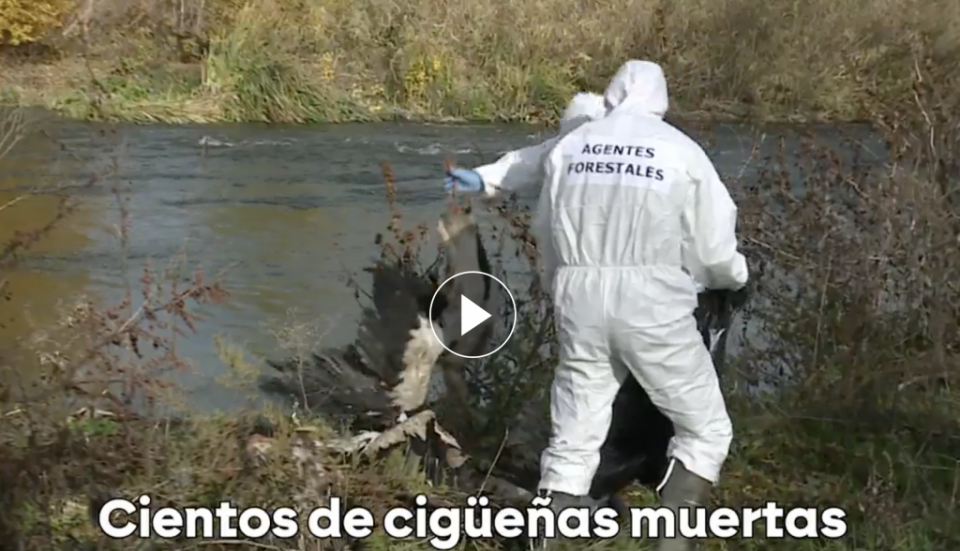
Around 400 storks have been discovered dead along a stretch of river south of Madrid, authorities said on Tuesday, sparking fears that a highly contagious form of bird flu could be present.
Avian influenza, commonly known as bird flu, seldom represents a danger to people but can have severe consequences for agriculture, including heavy losses for farmers and disruptions to food supply chains.
The birds were found on the banks of the Manzanares River in Getafe, a municipality on the southern edge of the Spanish capital.
Although early tests identified a low-pathogenic strain of avian influenza in the area, the Madrid regional government said that the ‘large number’ of stork deaths has raised concerns that a more aggressive variant may be circulating.
Authorities confirmed that samples have been sent to a laboratory run by the Ministry of Agriculture for more detailed testing.
A range of preventative measures is already in force, including a ban on free-range poultry, restrictions on access to breeding facilities, limits on keeping ducks and geese with other poultry, and tighter monitoring of water sources. ALSO READ: Spain bans raising of poultry outdoors from Monday due to increase in bird flu cases.
Bird flu is spread through droppings, saliva and contaminated food or water, but it is not transmitted through the consumption of poultry products.
Across Europe this year, more than 200 outbreaks of avian influenza have been recorded at poultry farms — a figure higher than in recent years but well below the 2022 peak, when tens of millions of birds were culled.
Subscribe to the Weekly Newsletter from Spain in English.
La ribera del Manzanares se convierte en un cementerio de cigüeñas por un posible brote de gripe aviar que la CAM descarta como grave https://t.co/HeS6jBad6i
— laSexta (@laSextaTV) December 9, 2025

Click here to get your business activity or services listed on our DIRECTORY.