Catalonia declared a drought emergency in a total of 24 municipalities on Wednesday, which follows a severe lack of rain during the past 30 months.
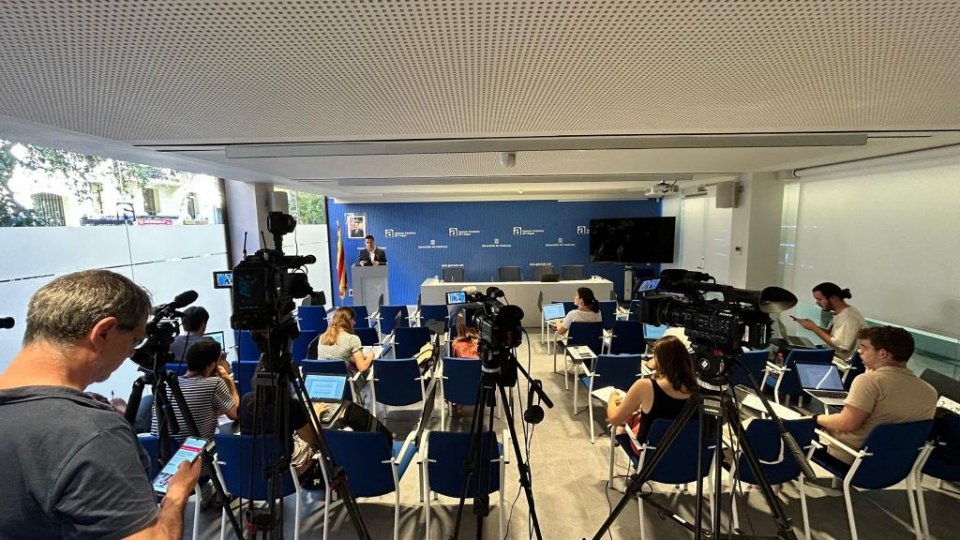
Restrictions that have been put in place will principally affect agricultural and industrial water usage but not drinking water, the Catalonia Water Agency Director Samuel Reyes said at a news conference [main image]. The measures will come into force next week.
The emergency declaration will affect 22 towns in Alt Empordà (see full list below), the region’s most northeastern county, and that are supplied by the aquifer of the Fluvià-Muga, one of the main sources of water supply for a large part of the region. It will also affect two towns (Riudecanyes and Duesaigües) in the Baix Camp area, just south of Barcelona, that depend on water from the Riudecanyes reservoir. The municipalities have a combined population of 26,000, the agency said.
The Fluvià-Muga aquifer has reached it lowest level since 2009 and the reservoir at Riudecanyes is at 6%, with less than 0.3 hm3.
Irrigation water for agriculture will be reduced by 80% and supplies for industrial use by 25%. Filling swimming pools and watering gardens and parks will be prohibited. The emergency restrictions also ban the filling of public fountains and using fresh water to wash cars.
The towns will also have their per capita water allocations reduced from 230 litres per day to 200 litres. The supplies are intended for residential uses such as washing, and public services such as street cleaning.
The Catalonia Water Agency said residents normally use 116 litres of water daily, and Reyes urged people to try to reduce that to 90 litres.
Catalonia has been one of the regions hardest hit by a drought affecting much of Spain for the past two years. Parts of Catalonia and the Andalusia region already adopted less-stringent limits on water use because of the drought.
Spain’s Ecological Transition Ministry said on Wednesday that reservoirs nationally were at 42% of their capacity.
The 22 affected municipalities in the Alt Empordà county of Catalonia, which comprise a total population of 24,399 inhabitants, are: Agullana, l’Armentera, Capmany, Espolla, Garriguella, la Jonquera, Masarac, Mollet de Peralada, Palau-saverdera, Pau, Pedret i Marzà, Peralada, Sant Climent Sescebes, Sant Miquel de Fluvià, Sant Mori, Sant Pere Pescador, Torroella de Fluvià, Ventalló, Vilabertran, Viladamat, Vilajuïga and Vilamacolum.
💧 L'Agència Catalana de l’Aigua (@aigua_cat) declara l'escenari d'emergència a l'aqüífer del Fluvià Muga i a l'embassament de Riudecanyes
— Govern. Generalitat (@govern) August 2, 2023
ℹ Es fixa una limitació del consum global d’aigua per abastament a un màxim de 200 litres per habitant i diahttps://t.co/N1lBQ5A6Xi
Sign up for the FREE Weekly Newsletter from Spain in English.
Please support Spain in English with a donation.
Click here to get your business activity or services listed on our DIRECTORY.
Click here for further details on how to ADVERTISE with us.